Fertilizers Distribution
St. John’s
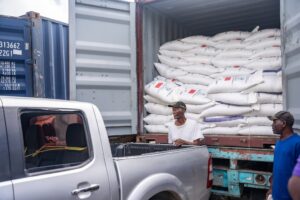
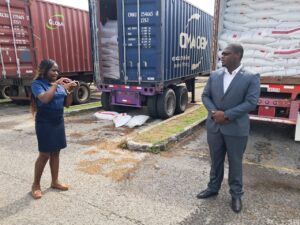
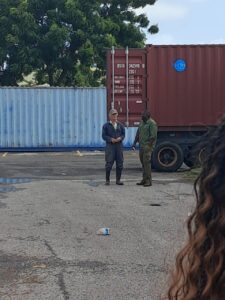
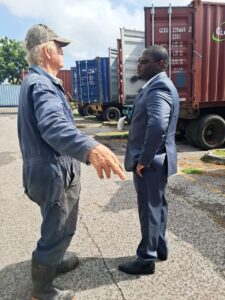
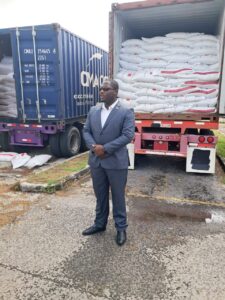
This morning, Minister Anthony Smith jr, along with Mr. Ika Fergus/Chief Extension Officer and other Ministry staff members proudly began the fertilizers distribution to farmers of the South West Agricultural district.
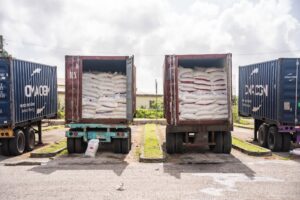
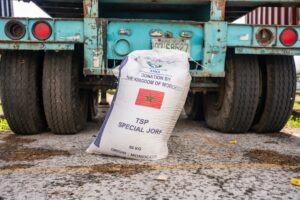
This distribution was made possible through the generous and timely donation from the Kingdom of Morocco. “This generousity and collaboration began since 2018, the government and farming community are very grateful for this donation, which is the largest thus far”, commented Minister Smith.
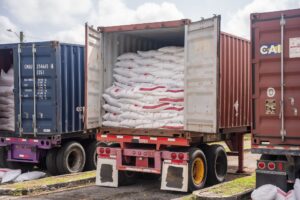
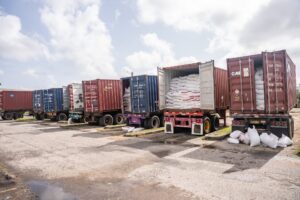
Received were eight containers with over four thousand bags with four types of fertilizers. These fertilizers include Monoammonium Phosphate (MAP), Urea Bulk (DAP), Triple Superphosphate (TSP), and Nitrogen Phosphorus and Potassium (NPK). “With the proper use of the fertilizers we are hopeful for better and more yield from our crop production as we collaboratively work towards our Food security goals” concluded Minister Smith.
The distributions are held at the Agricultural Extension Division aka “Bend down” located on Kentish Road. The following dates are affixed to the other districts are as follows:
Tuesday 8th September North West
Wednesday 9thSeptember South East
Thursday 10th September Public Holiday (NO distribution)
Friday 11th September All Agricultural Stations
Monday 12th September South Central
Tuesday 15th September North East
The distributions are expected to conclude on Friday 16th October, World Food Day. This date was set aside specially for schools and Barbuda.
Strengthening Regional and Extra Regional Cooperation to Enhance the Promotion of Management, Development and Sustainable Use of Living Aquatic Resources
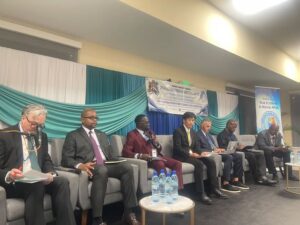
During his participation in a panel discussion on “Strengthening Regional and Extra Regional Cooperation to Enhance the Promotion of Management, Development and Sustainable Use of Living Aquatic Resources”, Minister Baltimore called for deeper collaboration amongst OECS Member States to maximize the benefits of the Blue Economy. In his presentation, the Minister mentioned the emergence of the Blue Economy as a critical sector of development to the economies of the OECS. He stated that “The OECS should speak with One Voice when engaging international partners on matters related to the Blue Economy. As SIDS we share similar challenges and therefore should address them collectively to devise solutions for the greater development of our countries.”
Minister Baltimore also addressed issues related to Sargassum affecting the Region, and commended the Government of Japan for its recent donation of an Aquatic Harvester to Antigua and Barbuda. Consequently, he called for further research to devise effective solutions to tackling the issue which has adversely affected the livelihood of many within the Region.
24th Eastern Caribbean Ministerial Meeting on Fisheries and the Sustainable Use of Living Aquatic Resources
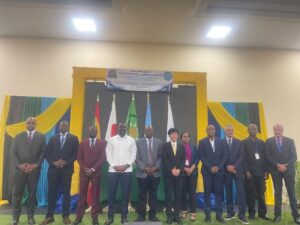
On Thursday 3rd September, 2026 the Honourable Randy Baltimore, Minister of State in the Ministry of Agriculture, Lands, Fisheries and the Blue Economy participated in the 24th Eastern Caribbean Ministerial Meeting on Fisheries and the Sustainable Use of Living Aquatic Resources held in St. George’s, Grenada.
During a presentation on “the Status of Fisheries in the Caribbean Region”, Minister Baltimore called for a collective shift in the way of doing business by fisherfolk within the Region. He emphasized that a more business focused approach should be adopted by fisherfolk to increase revenue and uplift the productivity of the entire sector across the OECS. Minister Baltimore also stated that the Region should explore fish farming and fish ranching to complement traditional methods of fishing, which would create employment and provide additional revenue streams for those within the industry.
Furthermore, the Minister supported the call for the establishment of an OECS Business Forum on Fisheries, which was suggested by Ambassador Daven Joseph. The proposed Business Forum would seek to encourage greater Public-Private Partnerships to allow for further investment, greater research through data collection, and renewed interest in the fisheries sector.
The meeting held in collaboration with the Government of Japan and the six Member States of the OECS, focused on the opportunities and challenges faced in the fisheries sector. The delegation of Antigua and Barbuda also comprised of His Excellency Mr. Daven Joseph, IWC Commissioner; Ms. Ann-Louise Hill, Director of the Blue Economy (Ag); and Mr. Kurt M. Williams, Senior Foreign Service Officer.
Pineapple Production Update
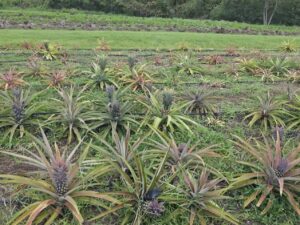
Under the leadership of Hon. Anthony Smith Jr./Minister of Agriculture, and Hon. Randy Baltimore/Minister of State, the Ministry of Agriculture continues to advance efforts to strengthen local pineapple production.
We are currently awaiting the next 27,000 pineapple plants, which will further support the expansion of pineapple cultivation across Antigua and Barbuda. Once the Ministry’s laboratory is fully functional, local production of planting material will increase, reducing our reliance of the assistance from the tissue culture lab in St. Vincent and the Grenadines.
With the assistance and support of CARDI and IICA, this is another step toward building a stronger, more self-sufficient agricultural sector and ensuring that we safely continue to grow our own food.
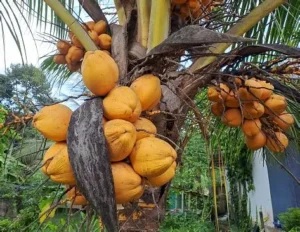
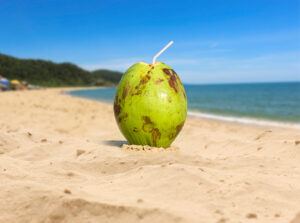
World Coconut Day: Going Coconuts for One of Nature’s Greatest Gifts by Shenequa Williams
If you’ve ever cracked open a coconut with one swing, congratulations, you’re officially a tough nut to crack! If not, don’t worry. Coconuts have been keeping people humble for centuries.
Every year on 2nd September, the world celebrates World Coconut Day, recognizing one of the most versatile fruits on the planet. (Yes, despite its name, the coconut is technically a fruit!)
Here in Antigua and Barbuda, coconuts are more than just something to sip through a straw on a hot day. They’re part of our culture, our cuisine, and our island lifestyle. Whether you’re cooling down with fresh coconut water after a day in the sun, grating coconut for traditional sweets, adding it to delicious local dishes, or enjoying a refreshing coconut ice cream, this tropical treasure has earned its place in our hearts.
Across Antigua and Barbuda, coconut trees line our beaches, farms, villages, and backyards, standing tall as a familiar part of our beautiful landscape. They’re not just scenic, they’re valuable. Coconut palms help reduce coastal erosion, provide shade, support biodiversity, and offer opportunities for local entrepreneurs to create products such as coconut oil, soaps, pastries, crafts, and beverages.
As interest grows in value-added agricultural products, coconuts continue to offer exciting opportunities for farmers and agro-processors looking to diversify their income while making the most of locally grown resources.
Did You Know that a coconut can float across oceans, allowing it to spread naturally to new coastlines?
Did You Know that despite growing in salty coastal environments, coconut palms don’t actually drink seawater. Their roots absorb fresh groundwater beneath the soil?
This World Coconut Day, take a moment to appreciate this incredible fruit that gives us so much. Whether you’re enjoying a refreshing coconut, supporting a local vendor, trying a new coconut recipe, or simply relaxing beneath the shade of a coconut palm, there’s plenty to celebrate.
After all, life is always a little sweeter when you go coconuts!
Happy World Coconut Day from the Ministry of Agriculture, Lands, Fisheries and the Blue Economy!


Agricultural Science Teachers Attended Annual Workshop by Carol-Faye Bynoe-George
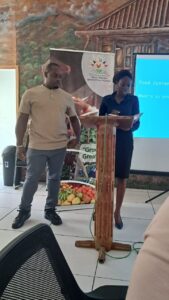
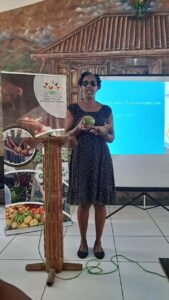
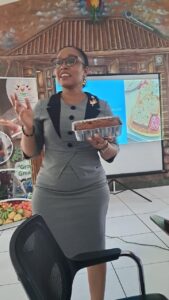
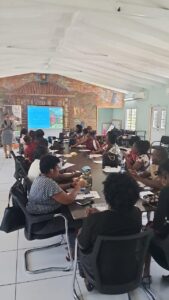
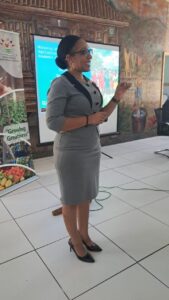
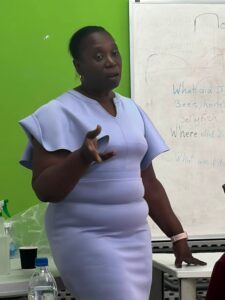
Today September 2nd, the Agricultural Science Department within the Ministry of Education held its annual Agricultural Educators’ seminar and workshop. This training was held at the Department of Environment Conference room and was hosted by Mrs. Nicolette Francis/Agricultural Science Education Officer.
There were over forty teachers from Early childhood (pre-school), primary and secondary in attendance, most of which seemed to be eager for what the 2026/27 academic year will be offering. The focus of the workshop was not only the theme of the department “Growing Greatness” but additionally the vision and the core value “Passionate, Committed and Responsible” that are the expectations of the participants in the subject and at their schools.
Several activities were done throughout the session and these included the triangle exercise, it was requested that everyone drew a triangle and wrote at the top their expectations for 2050, at the left corner they had to state what in the past that would prevented them from achieving these goals, then at the right corner they were to stated what was presently preventing them in obtaining their desired outcomes.
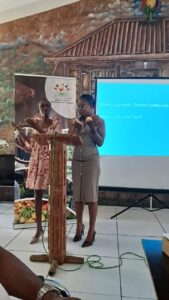
Additionally, a Food System Transformation exercise was demonstrated by the teachers who were placed into three groups. The teachers had to portray scenarios pertaining to food items that would be converted into products. These food items were avocado, bananas, cassava, coconut, corn, mango, peppers, raisins, soursop and walnut.
Group 1 presented vegan dishes that could be made using cassava, raisins, soursop and walnuts. Foods such as fried soursop served with cassava and cassava porridge.
Group 2 scenario depicted a shipwreck/survival situation with only bananas, cassava and coconuts that were available and were converted into cakes or consumed in their original state.
Group 3 did a slavery plantation presentation where only bananas were available and they explained several types of dishes that would have been done to include chips, pancakes, pies, porridge and wine.
Other activities included a game which appeared simple but was much more difficult than it appeared since it required concentration and focus. This was followed by each of the levels sharing some constraints of which included lack of support, resources, land, labour, praedial larceny and the negative mind set or stigma regarding the agricultural sector.
In the latter part of day, Mrs. Francis, introduced Dr. Andrew Hunte from University of the West Indies (UWI) who did a presentation on the uses of AI by educators and students, engaging AI to make the classroom more interactive, the use of the programmes such as Chat GPT to enhance projects and error analysis. Dr. Hunte also encouraged the educators to pursue higher education and to become certified tutors. In closing he informed the participants that in the near future they can pursue Agricultural Science at the UWI Five Island Campus.
Special presentations were made to two Agricultural Science teachers that were now working with ABCAS at the Agricultural Science School. Both Mrs. Andrea Edwards-Browne and Mr. Keyon Samuel taught at Pares Secondary and All Saints Secondary respectively for a number of years. Other teachers awarded for their dedication, hard work and early reporting were Samanthia Zachariah/ Jennings secondary,Mrs. Lee-Williams/Sir Novelle Richards Academy, Ms Keizer/Ottos Comprehensive School, Ms Denise Hodge/Antigua Girls High, Miss Sheckle/Clare Hall Secondary School, Mr. Philip/Cedar Grove Primary School and several more outstanding educators.
To conclude the day’s agenda, Mr. Raine and Mr. Brann representatives of the Department of Environment (DOE) shared information on the Adaptation Fund pertaining to Water/irrigation project and a survey that is presently conducting to determine which irrigation system or method would be more suitable for the need of more water availability, improvement and the potential of support from the DOE through this fund.
Before the departure of the educators, Mrs. Francis did some housekeeping; she reiterated that hearing from them pertaining to any constraints and support is required and outlined the expectations of the MOE from their educators for the upcoming academic year.
CONGRATULATIONS TO OUR DELEGATES!
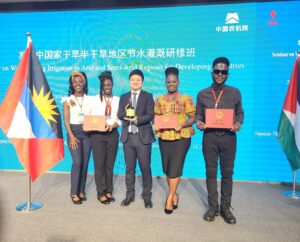
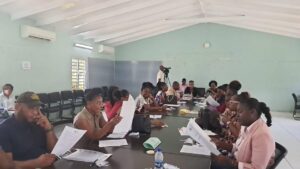
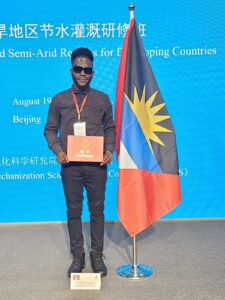
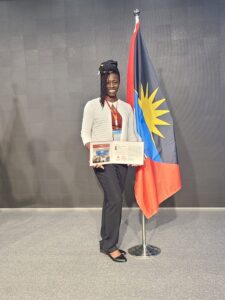
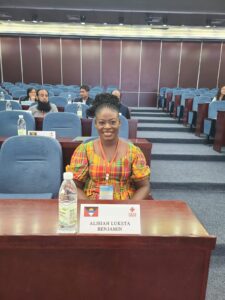
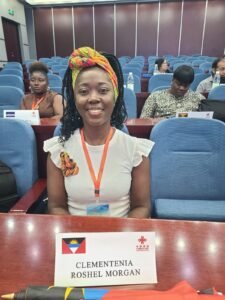
Congratulations to the four delegates from Antigua and Barbuda who successfully graduated from the Irrigation Training Programme in China.
Mr. Ma Tang, General Manager of CAAMS, was present at the graduation ceremony and had the opportunity to meet with the Antiguan and Barbudan delegates.
We proudly celebrate their achievement and look forward to the valuable knowledge, skills and experiences they will bring home to support the continued development of agriculture and irrigation in Antigua and Barbuda.
Congratulations once again to our four graduates!
Interns Return to GARD Center to Complete Nursery Painting by Shenequa Williams
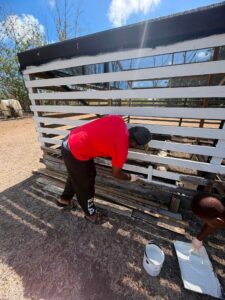
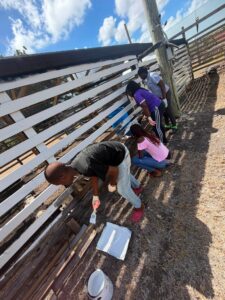
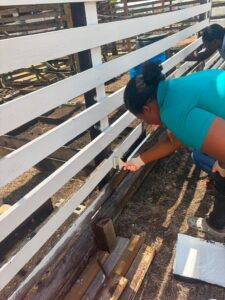
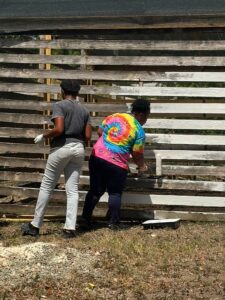
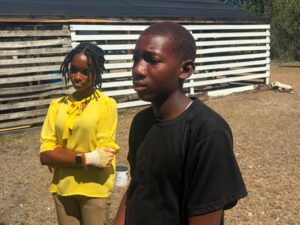
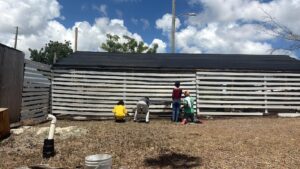
The Ministry of Agriculture Summer Interns returned to the Gilbert Agricultural and Rural Development Center today, August 27th to assist with the completion of the painting of the plant nursery.
Nine (9) interns returned to lend their time and effort, building on the work they began during their previous visit. Together, they worked to complete the remaining painting, demonstrating teamwork, commitment and a willingness to contribute to the upkeep of the facility. The extension and upgrade to the plant nursery have been due to the generous donations from the General Board of Global Ministries and the Mill Reef Fund.
The activity provided another opportunity for the interns to put their skills into practice while giving back to the GARD Center, which has been an important part of their 2026 Internship Programme experience.
The GARD Center expressed its appreciation to the interns for returning to complete the painting and for the time, effort and enthusiasm they contributed to improving the nursery. The Ministry of Agriculture also extends sincere thanks to the interns for willingly returning to lend a helping hand.
The Ministry of Agriculture and the GARD Center recognize the value of providing young people with opportunities to learn, participate and contribute. The interns’ return visit demonstrated that their involvement in the programme extends beyond gaining knowledge, it is also about making a positive and lasting contribution.
As the Ministry continues to encourage greater youth involvement in Agriculture, activities such as these highlight the meaningful role young people can play in supporting agricultural institutions and their communities.
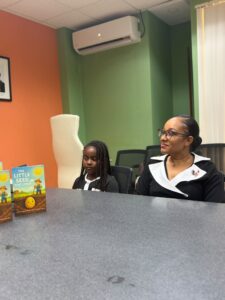
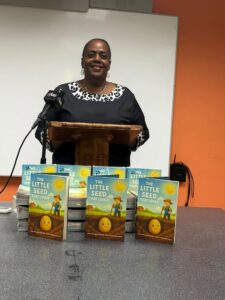
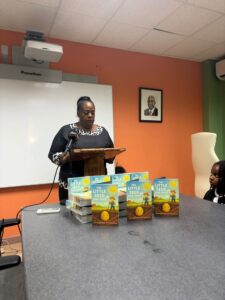
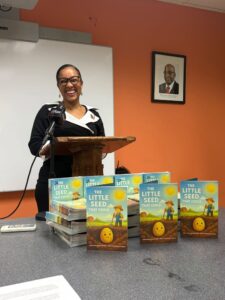
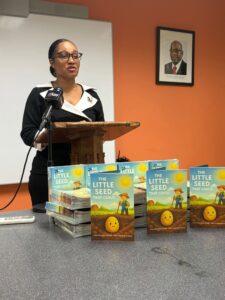
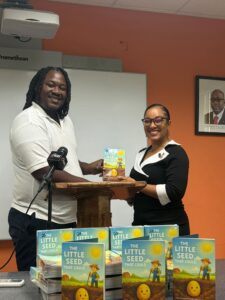
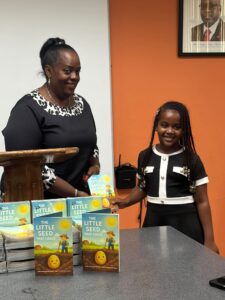
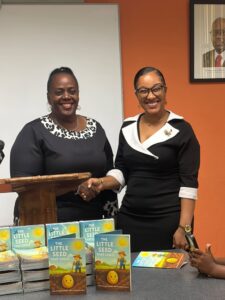
Ministry of Agriculture Hands Over “The Little Seed That Could” to Ministry of Education by Shenequa Williams
The Ministry of Agriculture, Lands, Fisheries and the Blue Economy has officially handed over 400 copies of The Little Seed That Could to the Ministry of Education for distribution among preschools across Antigua and Barbuda.
The children’s book, the first in a planned series, was written by Mr. Tyreke Thomas-Horsford and edited by Carol-Faye Bynoe-George, Head of Communications at the Ministry of Agriculture. The publication introduces young learners to agriculture in a simple and engaging way, focusing on cultivation, propagation and the importance of patience.
“We felt that it was our responsibility and priority to ensure the adequate information is disseminated on a timely basis and relevant material produced and shared whenever possible.” Ms. Bynoe-George highlighted the importance of making agricultural information accessible to children.
Receiving the donation on behalf of the Ministry of Education was Mrs. Nicolette Francis, Education Officer responsible for Agricultural Science within the Ministry of Education. She expressed gratitude for the continued collaboration between the two ministries and the opportunity to provide children with meaningful educational resources.
“It’s not only about The Little Seed That Could, but it’s also understanding that everything is possible once we try and once we believe that we can,” Francis said.
The ceremony also included the announcement that a second book is already in development, with the Ministry of Agriculture aiming to make its next contribution to the education sector by January 2027.
The initiative represents a shared commitment by both ministries to “Growing Greatness” by planting the seeds of agricultural knowledge in the minds of the nation’s youngest learners.
International Day for Underwater Cultural Heritage by Shenequa Williams
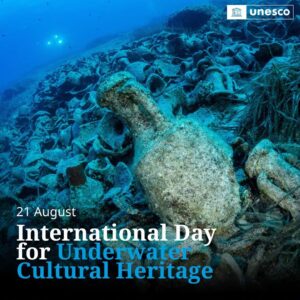 Every year on August 21st the International Day for Underwater Cultural Heritage is celebrated to highlight the importance of protecting the history and cultural treasures found beneath our oceans, seas and other waterways.
Underwater Cultural Heritage includes shipwrecks, ancient settlements, artefacts and other remains that tell stories about the people, communities and civilizations that came before us. These sites provide valuable insight into our shared history and connection to the sea.
As we celebrate this day, we are reminded of the need to protect and preserve these underwater treasures for future generations. Our waters hold stories worth discovering, understanding and protecting.