KNOW THE FACTS…. Turmeric
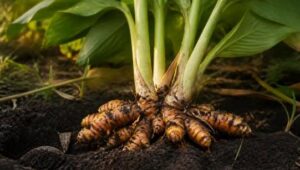 Turmeric is a vibrant, tropical perennial plant in the ginger family, known for its brilliant golden-orange underground stems (rhizomes), earthy aroma, and powerful medicinal properties. Native to Southeast Asia and India, this ancient spice is a pillar of modern wellness trends.
Culinary and Aesthetic Uses
● Golden Flavor: When fresh or dried into a fine powder, turmeric brings a mild, warm flavor with a subtle hint of ginger and pepper to curries, soups, and rice dishes.
● Natural Dye: Its staining power is incredibly potent. Turmeric has been used for centuries to dye fabrics, and it is a popular ingredient in natural face masks to give skin a healthy, radiant glow.
Growing Habits
● The Rhizome Network: What we call turmeric root is actually a rhizome, a horizontal underground stem that sends out roots and shoots. The main central hub is called the “mother” rhizome, which develops finger-like branches off the sides where the best culinary spice is harvested.
● Tropical Foliage: Above ground, turmeric looks like a lush tropical houseplant. It grows large, smooth, lance-shaped leaves that can reach up to 3 to 4 feet tall, occasionally blooming with beautiful, torch-like white or pink flower spikes.
Traditional and Everyday Uses
● In India, turmeric has been used for thousands of years not just as food, but as a traditional skin treatment and a household remedy for minor ailments.
● It is a powerful natural dye. It is the secret behind the bright yellow hue of American yellow mustard and many commercial cheeses, margarines, and pickles.
Picture Source: