Know the Facts… Irrigation: Systems and Techniques
 Irrigation is the process of supplying water to crops artificially to help them grow. It is important in agriculture because it provides plants with water when rainfall is not enough, especially during dry periods. Proper irrigation helps farmers maintain healthy crops and improve production.
Types of Irrigation Systems and Techniques
There are several irrigation systems and techniques used by farmers.
1. Surface Irrigation
Surface irrigation is a method where water flows over the soil by gravity. It includes flooding and furrow irrigation, where water runs through small channels between crop rows. It is commonly used for crops such as rice and vegetables, but it can waste water if not properly managed.
2. Sprinkler Irrigation
Sprinkler irrigation uses pipes and sprinklers to spray water over crops, similar to rainfall. It can cover large areas and is suitable for many types of crops. However, strong winds and high temperatures can cause water loss through evaporation.
3. Drip Irrigation
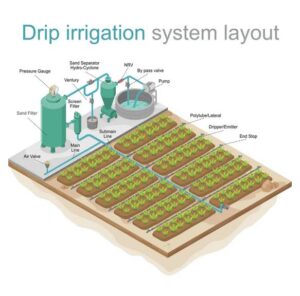
Drip irrigation delivers water slowly and directly to the roots of plants through tubes and small emitters. It helps reduce water waste and is useful for vegetable crops, fruit trees and greenhouse production. However, the equipment can be costly and may become blocked if not maintained.
4. Subsurface Irrigation
Subsurface irrigation supplies water below the soil surface, close to the roots of plants. This reduces water loss through evaporation and can be useful for certain crops, but installation and maintenance may be expensive.
Importance of Irrigation
Irrigation helps crops grow during dry weather, improves crop yields and allows farmers to produce food more consistently. Choosing the right irrigation method depends on the type of crop, soil conditions, water availability and cost. Farmers should use water wisely to avoid waterlogging, soil erosion and unnecessary water waste.
In conclusion, irrigation is an important part of agriculture. Using suitable irrigation systems and techniques helps farmers conserve water, maintain healthy crops and support food production.
Sources: