Beyond the Canopy: The Work and Responsibility of a Forestry Officer in Antigua and Barbuda by Camellia Wallace Tonge
 When we think about protecting the environment, we often overlook the dedicated professionals who work behind the scenes to preserve our natural resources. In Antigua and Barbuda, Forestry Officers play an important role in managing the nation’s forests, conserving wildlife, protecting biodiversity and promoting the responsible use of our natural environment. Their work extends across communities, forests, roadsides and other natural spaces, contributing to the well-being of both the environment and the people who depend on it.
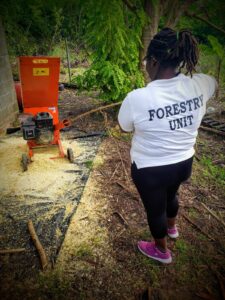
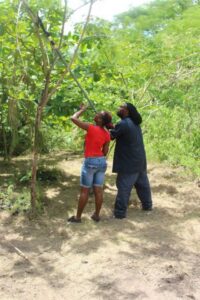
The responsibilities of a Forestry Officer extend far beyond planting trees. Officers contribute to nursery management, where native trees, shrubs and other plants are propagated for reforestation, landscaping and conservation projects. They support tree planting initiatives, maintain nature trails, assist with habitat restoration and provide guidance on proper planting, pruning and tree care. Their work also includes hurricane preparedness consultations, tree felling guidance and wildlife-related services, helping individuals and communities make informed decisions about the management of their surroundings.
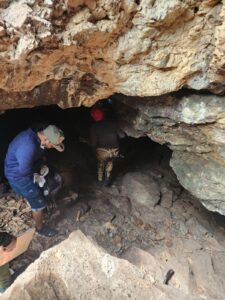
Another important aspect of forestry is the conservation and monitoring of the country’s biodiversity. Antigua and Barbuda is home to a variety of plant and animal species, each contributing to the balance of its ecosystems. Forestry Officers help promote awareness of these species and the threats they face, including habitat disturbance, vegetation fires and invasive species. Through field activities, environmental presentations and public education programs, they encourage communities, particularly young people, to understand the importance of conservation and take an active interest in protecting the natural environment.
Forestry work also involves making difficult decisions where environmental preservation and public safety must be considered together. Tree assessments, for example, require officers to examine the condition of a tree, its structural stability, signs of decay or termite activity, and the potential consequences of failure. The location of a tree is equally important, particularly when it stands near roads, buildings or other areas where falling branches or a collapsing trunk could cause harm.
The assessment of three mahogany trees along Sir George Walter Highway, near V.C. Bird International Airport, illustrates the responsibility involved in such decisions. Concerns about termite activity, structural deterioration and aviation safety required careful consideration of the potential risks. Situations of this nature demonstrate that tree management is not simply a matter of preserving every tree or removing those that appear problematic. It requires informed judgement, a thorough assessment of the circumstances and careful consideration of both environmental value and public safety.
There is a common misconception that forestry is primarily concerned with planting trees or preventing their removal. In reality, responsible forest management requires a broader understanding of how natural resources should be protected, maintained and used. Trees provide shade, support wildlife, contribute to soil conservation and help maintain healthy ecosystems. However, when trees become hazardous or natural habitats are under threat, appropriate action may be necessary. The challenge for Forestry Officers is to determine the most suitable response while ensuring that environmental considerations remain central to their work.
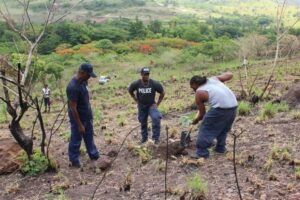
The importance of forestry is also evident in the protection of forested areas and the responsible management of land. Antigua and Barbuda’s forests contribute to the health of watersheds, help protect the soil and provide habitats for wildlife. Activities such as indiscriminate vegetation clearing, illegal forest use and uncontrolled fires can place these resources at risk. Forestry Officers therefore contribute to conservation efforts through fieldwork, public education, reforestation and the application of relevant forestry legislation. These responsibilities are particularly important for a small island nation, where the loss or degradation of natural resources can have lasting consequences.
For anyone considering a career in forestry, an appreciation for nature is a valuable starting point, but the profession also demands practical skills, sound judgement, patience and effective communication. Officers must be able to observe changes in the environment, assess potential problems, work outdoors in varying conditions and explain technical matters to members of the public. Knowledge of forestry, environmental science, plant biology, wildlife conservation or natural resource management can provide a useful foundation for the work, while practical experience helps develop the skills required in the field.
Being a Forestry Officer in Antigua and Barbuda means accepting responsibility for the protection and sustainable management of the nation’s natural heritage. It involves more than caring for individual trees; it requires an understanding of the relationships between plants, wildlife, land and people. Through conservation initiatives, environmental education, tree management and fieldwork, Forestry Officers help address environmental challenges while encouraging greater public appreciation of the natural world.
Although much of this work takes place away from the public eye, its effects can be seen in healthier landscapes, protected habitats, better-informed communities and a greater awareness of environmental responsibility.
The work of a Forestry Officer is therefore essential to preserving Antigua and Barbuda’s natural resources and ensuring that the country’s environmental heritage can be appreciated and enjoyed by generations to come.