Speaking at Caribbean Week of Agriculture in Jamaica, the IICA Director General renews the organization’s commitment to regional development and calls for stronger partnerships to strengthen agrifood systems
 Speaking at Caribbean Week of Agriculture in Jamaica, the IICA Director General renews the organization’s commitment to regional development and calls for stronger partnerships to strengthen agrifood systems
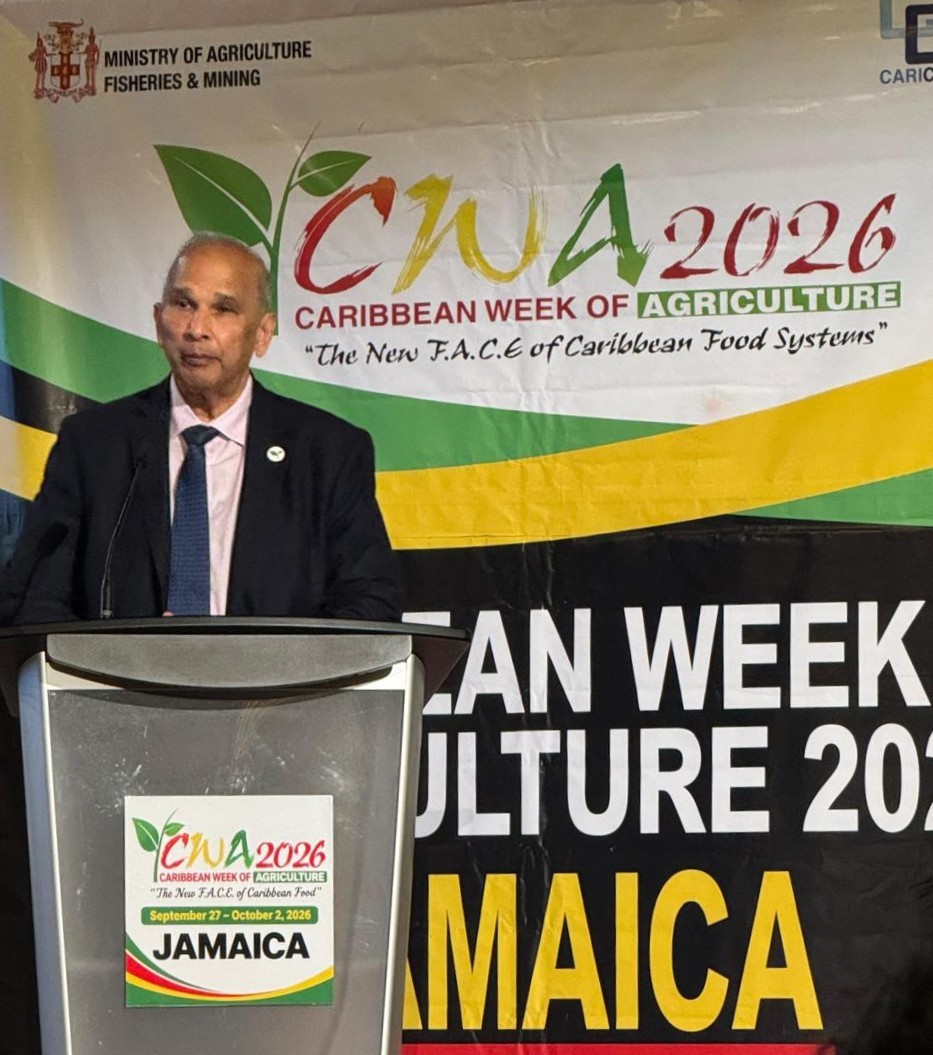
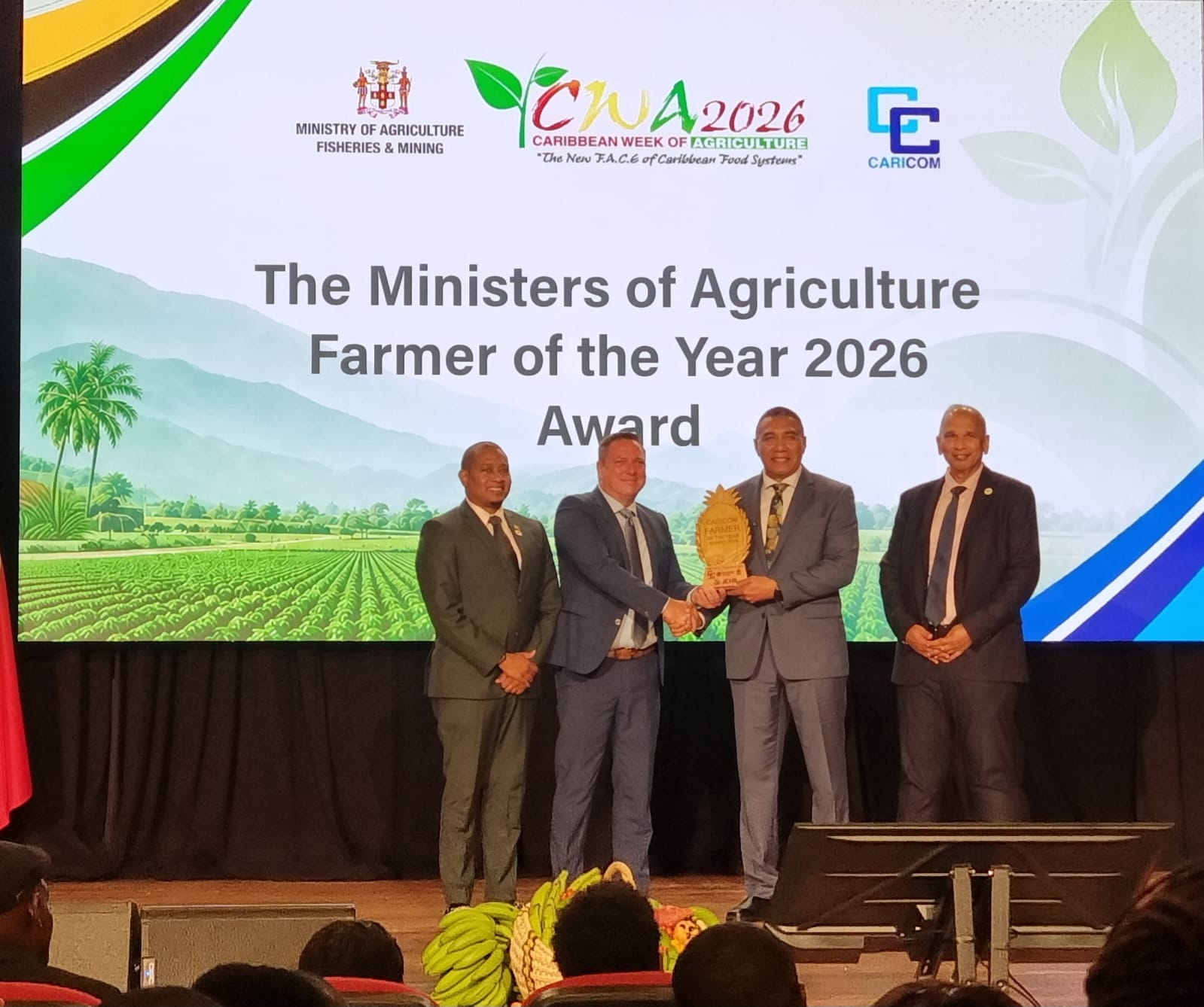
Trelawny, Jamaica, 28 September 2026 (IICA) – The Director General of the Inter-American Institute for Cooperation on Agriculture (IICA), Muhammad Ibrahim, participated in the opening ceremony of the 20th Caribbean Week of Agriculture (CWA). There, alongside senior officials of that country, he renewed the organization’s commitment to developing the region, with agriculture playing a central role.
The event, which is being held under the banner “The New F.A.C.E. of Caribbean Food Systems,” will continue until Friday, 2 October. Jamaica’s Prime Minister, Andrew Holness, and Minister of Agriculture, Fisheries, and Mining, Floyd Green, also spoke at the opening.
Also addressing the gathering was Assistant Secretary-General of the Caribbean Community (CARICOM), Wendell Samuel.
More than 670 delegates from 34 countries are attending the event. IICA has always provided support for CWA, which was first staged in Trinidad and Tobago in 1999. Since that time, it has experienced formidable growth and is now the main strategic forum for debate on the Caribbean agricultural agenda.
The activity began with an appeal to deepen cooperation to transform agriculture into an engine of development for the Caribbean region. Jamaica is hosting CWA less than one year after Hurricane Melissa devasted the country, yet, in the aftermath, the agriculture sector has shown an immense capacity for recovery.
Prime Minister Holness stressed that, “Agriculture in the Caribbean should no longer be seen simply as a rural occupation, but as an industry with significant potential to generate innovation, build wealth, contribute to economic development, and attract youth.”
“The need to increase productivity must be the main driver of agricultural policies. A more productive sector will allow farmers to earn more income, consumers to benefit from food of a higher quality at a lower price, and exports from the region to increase,” he added.
The Jamaican Prime Minister also emphasized the need for a sustained commitment to create conditions that will enable farmers to become increasingly competitive, by mobilizing investments, building trade partnerships, and generating opportunities in the value chain.
Holness then spoke about the digital transformation of agriculture, warning that innovation must be accessible to all farmers and not only to large producers: “We must ensure financing so that everyone can benefit from advances in agricultural science and new technologies.”
The IICA Director General explained that IICA, which works together with CARICOM, the Organization of Eastern Caribbean States (OECS) and other regional agencies, has developed a specific strategy for the Caribbean, in keeping with its 2026-2030 Medium-term Plan.
“We recognize the challenges facing the region in relation to agricultural financing, and therefore make available IICA’s technical capacity, financial resources, and strategic partnerships to manage external resources aimed at implementing regional and national agrifood initiatives,” stated Ibrahim.
The Director General of IICA reported that the hemispheric agency is currently implementing several programs in the Caribbean that are aimed at supporting the “Vision 25 x 2025+5” initiative, which seeks to considerably reduce the region’s dependence on food imports.
Ibrahim also referred to the critical challenge posed by an aging rural population coupled with a shortage of agricultural professionals. He noted that IICA was addressing this challenge by actively delivering training in the Caribbean and mobilizing resources to develop strategic partnerships with leading institutions such as the Tropical Agricultural Research and Higher Education Center (CATIE), based in Costa Rica.
The Director General also pointed out that IICA had recently facilitated the signing of a letter of intent between the governments of Guyana and Brazil to establish a Caribbean Center for Agricultural Science, Technology, and Innovation, which will seek to accelerate the deployment and expansion of technologies, strengthen scientific capacities, and promote innovative solutions tailored to tropical agriculture.
For his part, Minister Green highlighted the remarkable resilience of Jamaica’s agriculture sector following the unprecedented devastation caused by Hurricane Melissa.
Green considered it crucial to transform dialogue into action and listed key issues for Caribbean agriculture, including building financing structures to provide capital to the rural sector, research aimed at producing inputs such as organic fertilizers, and facilitating food trade and transport between countries in the region.
“Caribbean agriculture has great potential because of its people and knowledge. However, we need a new approach to deepen cooperation and ensure that expectations are met,” he concluded.
Caribbean Week of Agriculture is attended by farmers, entrepreneurs, public policymakers, regional leaders, and rural youth and women. The event will shine the spotlight on four key issues: food security, climate-smart technologies, export expansion, and agribusiness.
The event, which features seminars, key meetings, and field visits, is organized by CARICOM and IICA, together with the Caribbean Agricultural Research and Development Institute (CARDI) and FAO.
About IICA
IICA is the specialized agency for agriculture in the Inter-American system, with a mission to encourage, promote and support its 34 Member States in their efforts to achieve agricultural development and rural well-being through international technical cooperation of excellence.
More information:
Institutional Communication Division.
comunicacion.institucional@iica.int
Press release online: https://iica.int/…/speaking-at-caribbean-week-of…/