Okra
What is Okra?
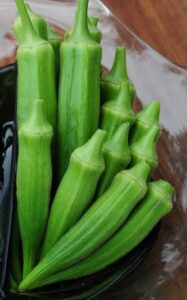
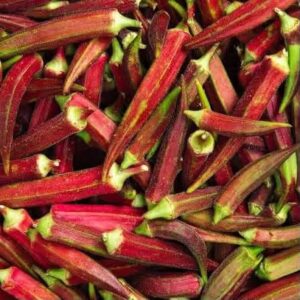
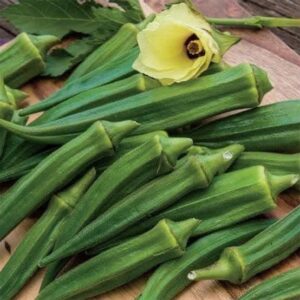
Okra (Abelmoschus esculentus) is a warm-season flowering plant belonging to the mallow family, Malvaceae. The part most commonly eaten is the young, immature seed pod. Cultivated in tropical, subtropical, and warm temperate regions around the world for its edible green (red in some cultivars) seed pods, okra is used in the cuisines of many countries.
It is known by several names around the world, including lady’s finger, ochro, gumbo and bhindi.
Okra comes in different varieties
Not all okra looks the same. Different varieties can have different colours, shapes, sizes and textures.
Some varieties found around the world include:
● Clemson Spineless – A popular green variety with smooth pods and few spines.
● Red Burgundy – Known for its beautiful red or burgundy-coloured pods. The colour can change when cooked.
● Emerald: Developed by the Campbell Soup Company, this tall plant produces smooth, round, dark green pods that hold their tenderness well at longer lengths
● Cajun Delight – A green variety that has been tested for its production and yield.
The variety a farmer chooses can make a difference depending on the soil, weather, planting time and how the crop is managed.
Okra in Antigua and Barbuda
Okra is not new to Antigua. It has been grown here for many years and has been part of the island’s agricultural production.
Okra is a key ingredient in Antiguan cuisine, most famously combined with cornmeal to make fungee, the national side dish, and added to stews like pepperpot.
For example:
• Fungee: A smooth, firm dish made by boiling cornmeal in okra water and folding in tender okra pieces. It is traditionally shaped into a round form and served alongside stews or saltfish.
• Pepperpot: A rich, slow-cooked vegetable and meat stew that uses okra both for flavor and as a natural thickening agent alongside spinach or, eggplant, and pumpkin.
Seasonality & Farming
• Growing Season: Okra grows locally and is in season from May to October, with peak harvest running between June and September.
• Local Production: It is widely cultivated across the islands on a commercial and small-farm scale.
Source: Food and Agriculture Organization of the United Nations (FAO), FAO AGRIS, and Government of Antigua and Barbuda.