International Day of Awareness of Food Loss and Waste by Brea Watkins
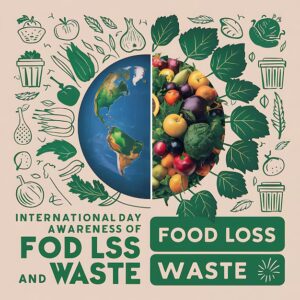 OBSERVANCE – 29th September, 2026
Stop Food Loss and Waste
For the People, For the Planet
Today, 29 September, the world observes the International Day of Awareness of Food Loss and Waste, an important day that calls attention to the amount of food lost or wasted throughout our food systems and the impact this has on people, agriculture and the environment. The day was proclaimed by the United Nations General Assembly in 2019 and is observed annually on 29 September. It encourages governments, farmers, businesses, communities and consumers to take action to reduce food loss and waste and help create more sustainable food systems.
But what is the difference between food loss and food waste?
Food loss can occur during the production and supply chain stages, from harvesting and handling to storage, transportation, processing and distribution. For example, fruits and vegetables can be damaged or spoiled before they ever reach a market or consumer.
Food waste, on the other hand, generally occurs closer to the point of consumption, including in retail, restaurants and households when food that could have been eaten is discarded.
Globally, approximately 13.2% of food produced is lost between harvest and retail, while an estimated 19% of food available to consumers is wasted at the retail, food-service and household levels.
Why should we care?
Food does not simply appear on our plates. Every piece of food represents land, water, energy, labour, transportation and other resources used to produce and deliver it.
When food is lost or wasted, those resources are also wasted.
FAO estimates that food loss and waste contribute around 10% of global greenhouse gas emissions. Food that is never eaten also occupies agricultural land that could otherwise be used more efficiently.
The 2026 focus: Food Loss and Waste and our Forests
This year’s observance highlights the “Transformative Potential of Reducing Food Loss and Waste”, with particular attention to its relevance to the forestry sector.
Agriculture is closely connected to forests and other natural ecosystems. Producing food that is ultimately never eaten places unnecessary pressure on land and natural resources. Reducing food loss and waste can therefore help make better use of the resources already invested in food production, while supporting more sustainable and resilient agrifood systems.
What can we do in Antigua and Barbuda?
Reducing food loss and waste starts with small but meaningful actions throughout the food system.
❖ Farmers and producers can improve harvesting, handling, storage and transportation practices.
❖ Consumers can plan meals, shop wisely and purchase quantities they can realistically use.
❖ Households can store food properly, make use of leftovers and find creative ways to use fruits and vegetables before they spoil.
❖ Communities and businesses can explore ways to prevent edible food from becoming waste and make better use of unavoidable food scraps.
Every step matters.
As an agricultural nation, Antigua and Barbuda has an important role to play in valuing the food we produce and reducing unnecessary losses along the journey from farm to table.
Food loss and waste is not only about what ends up in the bin. It is about the resources, hard work and opportunities that are lost along with it.
This International Day of Awareness of Food Loss and Waste, let us rethink how we produce, handle, purchase, prepare and consume food.
Waste less. Value more. Protect our resources. Build a more sustainable food future.
Stop food loss and waste, for the people, for the planet.
#FoodLossAndWaste #FLWDay #FoodSecurity #SustainableAgriculture #AntiguaAndBarbuda #Agriculture #FoodWaste #FoodLoss #SustainableFoodSystems #MinistryOfAgriculture
Sources: Food and Agriculture Organization of the United Nations (FAO) and United Nations Environment Programme (UNEP), the co-conveners of the International Day of Awareness of Food Loss and Waste.