Know the Facts Cucumber
Know the Facts
Cucumber
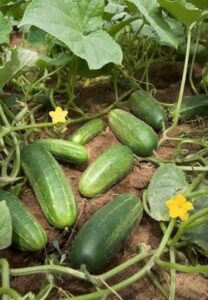
Crisp. Refreshing. Versatile.
Whether it is sliced into a fresh salad, added to a sandwich, blended into a refreshing drink, or enjoyed with a little salt, Cucumber is a familiar favourite in kitchens across the Caribbean. But there is much more to this cool and crunchy crop than meets the eye!
What exactly is a cucumber?
Cucumber, scientifically known as Cucumis sativus, belongs to the Cucurbitaceae family, the same plant family as pumpkin, squash, watermelon and melon.
Although cucumber is commonly treated as a vegetable in cooking, botanically speaking, it is actually a fruit because it develops from the flower of the plant and contains seeds.
So yes… that cucumber in your salad is technically a fruit!
A crop with an ancient history
Cucumber has been cultivated for thousands of years, with its origins traced to South Asia, particularly the region around India.
From there, cultivation spread to many parts of the world. Today, cucumber is grown in tropical, subtropical and temperate regions and has become an important crop for fresh consumption and food processing.
Not all cucumbers look the same!
Think every cucumber is long, dark green and smooth?
Think again!
Cucumber varieties can differ significantly in size, shape, colour, skin texture and taste. Some are long and slender, while others are short and rounded. Some have smooth skins, while others have small bumps or spines.
There are also varieties grown specifically for fresh eating and others primarily for pickling.
Cucumbers need pollinators!
Here’s a fascinating part of cucumber production: flowers and pollinators play a major role in fruit production.
Cucumber plants produce separate male and female flowers, and pollination is needed for many varieties to produce well-formed fruits.
Bees and other pollinating insects can help transfer pollen between flowers, making them valuable partners for farmers.
This is another reminder of why protecting pollinators is important to agriculture.
A crop suited to our climate
Cucumber is a warm-season crop, making it well suited to tropical and subtropical growing conditions.
However, successful production requires proper management. Farmers must pay attention to water, soil fertility, pests, diseases and plant spacing.
Cucumber plants also grow as vines, meaning they can spread across the ground or be trained onto trellises and other supports.
Growing cucumbers vertically can help farmers make better use of available space while keeping fruits off the ground.
Why water matters
Cucumber fruits contain a high proportion of water, which contributes to their refreshing and crisp texture.
But don’t let the watery fruit fool you, the plant itself needs a consistent supply of water for healthy growth and fruit development.
Good irrigation and water-management practices are therefore especially important during periods of limited rainfall.
From farm to table
Cucumber has plenty of uses beyond a basic salad.
It can be enjoyed:
● Fresh in salads
● In sandwiches and wraps
● Pickled
● In refreshing drinks
● As a side dish
● In cold soups and dips
Its versatility makes it an easy crop to incorporate into everyday meals.
Why cucumber matters to local agriculture
For Antigua and Barbuda, crops such as cucumber demonstrate the value of local vegetable production.
Growing more of the vegetables we consume can provide opportunities for farmers, support local food businesses and help strengthen our food systems.
Whether produced by commercial farmers or grown in a backyard garden, cucumber is a great example of a crop that can go from seed, to vine, to plate.
So the next time you reach for a crisp cucumber, remember: there’s a whole lot of agriculture behind that refreshing crunch!
Know your crops. Support local farmers. Grow local. Eat local.
#KnowTheFacts #Cucumber #AntiguaAndBarbuda #LocalAgriculture #CaribbeanAgriculture #FoodSecurity #FarmToTable #SupportLocalFarmers #GrowLocal #Agriculture
Source: Food and Agriculture Organization of the United Nations (FAO), U.S. Department of Agriculture (USDA), and agricultural extension resources.