Mangoes
Know the facts
Mangoes
One fruit. hundreds of varieties. countless ways to enjoy it!
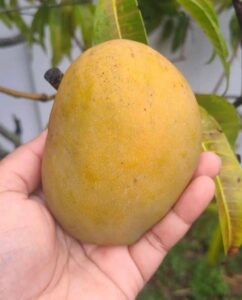
Is there anything that says Caribbean mango season is quite like climbing a tree, picking a ripe mango and enjoying it right there?
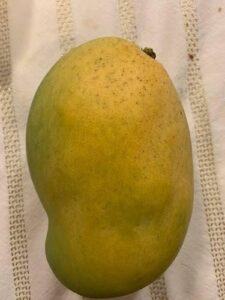
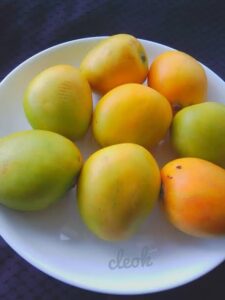
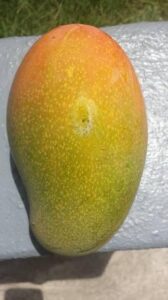
Sweet, juicy, sour, fibrous, smooth, green, yellow, orange or red, mangoes come in an amazing variety of shapes, sizes, colours and flavours.
And here’s a fact that might surprise you:
There are more than 1,000 mango cultivars around the world!
The mango we know today is scientifically known as Mangifera indica and belongs to the Anacardiaceae family, the same plant family that includes cashew. Mango originated in tropical Asia and is now grown throughout tropical and subtropical regions, including the Caribbean.
What exactly is a Mango?
A mango is the fleshy fruit of the mango tree, Mangifera indica.
Mango trees are:
● Evergreen
● tropical and subtropical
● long-lived perennial plants
● capable of producing fruit for many years
Depending on the cultivar and growing conditions, mango trees can become very large and may live for many decades. FAO’s crop information notes that mango trees can live for 100 years or more under suitable conditions. The fruit itself is technically a drupe, meaning it contains a hard inner stone surrounding the seed.
So that big “mango seed” you’re trying to cut around?
That’s the stone, or pit!
Not all mangoes are created equal!
Mangoes can vary dramatically in:
● Size
● skin colour
● Aroma
● Sweetness
● fibre content
● ripening colour
● flesh colour
● Shape
● harvesting season
Some are almost completely fibreless, while others have noticeable fibres.
Some are excellent for eating fresh, while others are especially useful for:
● Juice
● Chutney
● Jams
● Preserves
● dried fruit
● Purées
● pickles
FAO notes that mangoes are used both fresh and for products such as juice, jams, jellies and preserves, while unripe mangoes are commonly used in pickles and chutneys.
Caribbean Mangoes
The Caribbean has a rich diversity of mango cultivars and local mango types.
Some varieties you’ll hear about around the region include:
❖ Julie
One of the best-known Caribbean mangoes. Julie is a relatively small mango associated strongly with the Eastern Caribbean. FAO’s mango post-harvest compendium lists Julie as originating from Trinidad-Tobago and describes it as a small, juicy and sweet mango. It is also grown and enjoyed across several Caribbean islands.
❖ East Indian
Another popular Caribbean type, particularly associated with the islands of the English-speaking Caribbean. It is known for its distinctive flavour and is often enjoyed when ripe as well as used in local preparations.
❖ Number 11
A Caribbean mango type that can be found among the traditional mango varieties grown and enjoyed in the region.
❖ Madame francis
Also known as Francique, this is a famous Haitian mango. FAO describes it as a large, flattened mango with richly flavoured, low-fibre flesh.
And there are Mangoes from all over the world!
Some internationally important mango cultivars include:
● Tommy Atkins
● Kent
● Keitt
● Haden
● Ataulfo / honey
● Alphonso
● Dashehari
● Langra
● Carabao
● irwin
Research on mango cultivars identifies Tommy Atkins, Ataulfo, Kent, Keitt and Haden among the predominant cultivars in the Western Hemisphere, while cultivars such as Alphonso, Kesar, Dashehari, Langra, Totapuri and Carabao are important in other producing regions
What do we call mango across the Caribbean?
Here’s something interesting:
Unlike some Caribbean fruits that have completely different names from island to island, “mango” is actually widely used across the Caribbean.
For example:
 Antigua & Barbuda → mango
 Bahamas → mango
 Jamaica → mango
 Barbados → mango
 Dominica → mango
 Grenada → mango
 St. Kitts & Nevis → mango
 St. Lucia → mango
 St. Vincent & the Grenadines → mango
 Trinidad & Tobago → mango
 Cuba → mango / manga
 Puerto Rico → mango / mangó
 Dominican Republic → mango / mangue
 Haiti → mangot / mangot fil / manguier
 Martinique → mangue / manguier
These regional names are documented in botanical references for the West Indies.
but here’s the interesting part:
Sometimes the same variety has different local names, and sometimes the same name can be used for different local types.
That is why farmers, horticulturists and agricultural researchers often rely on cultivar names and botanical identification, rather than common names alone.
Why are mangoes important to agriculture?
Mango isn’t just a delicious fruit hanging from a tree. It has real agricultural value.
1. Mango provides income for farmers
Mangoes can be sold:
● fresh from the farm
● in local markets
● to processors
● for juice production
● to external markets where phytosanitary requirements allow
This creates opportunities for farmers, vendors, processors and other people involved in the agricultural value chain.
FAO sources describe mango as an economically important tropical fruit crop, while historical records also document commercial mango development projects in Antigua and Barbuda.
2. Mango supports food security
Mango trees provide locally produced fruit that can be eaten fresh or processed into different foods.
Unripe mangoes can also be used in:
● Chutneys
● Pickles
● Salads
● other culinary preparations
This versatility makes mango a valuable component of tropical food systems.
3. Mango can support agro-processing
A mango doesn’t have to end its journey at the fruit bowl!
Mangoes can be transformed into:
● Juice
● Purée
● Jam
● Jelly
● dried mango
● mango leather
● Chutney
● concentrates
This creates opportunities to add value to locally produced fruit and potentially reduce losses during periods of high production. FAO specifically identifies juice, wine and mango leather among potential value-added products.
4. Mango trees can support pollinators
Here’s one many people may not know:
● mango flowers provide nectar that honey bees can collect.
That means mango trees can have a connection to apiculture and pollinator activity as well as fruit production.
5. Mango adds diversity to farming systems
Agricultural diversity matters.
Growing different crops and maintaining different varieties can help preserve:
● genetic diversity
● local food traditions
● farmer options
● agricultural heritage
And with hundreds of cultivars around the world, mango represents an enormous reservoir of plant diversity.
6. Even the parts we don’t eat can have uses
Mango leaves and fallen fruit can have agricultural uses.
FAO documents mango leaves being used as livestock feed and mango seed by-products being used in feed applications for animals such as cattle, poultry and pigs.
That means the mango tree can contribute to more than just human food.
Mangoes and Antigua & Barbuda
Mango is already part of Antigua and Barbuda’s agricultural landscape.
FAO’s country information for Antigua and Barbuda identifies mangoes among the country’s main agricultural products.
And the Eastern Caribbean has a long history of mango production and post-harvest handling.
A CARDI technical manual on Julie mango documents mango cooling facilities and post-harvest infrastructure established across several Eastern Caribbean territories, including Antigua.
So when we talk about mango, we’re not just talking about a fruit we enjoy during mango season.
We’re talking about:
● Farmers
● crop diversity
● food security
● Livelihoods
● Markets
● Agro-processing
● Pollinators
● Agricultural heritage
Sources: Food and Agriculture Organization of the United Nations (FAO); Caribbean Agricultural Research and Development Institute (CARDI); Smithsonian National Museum of Natural History, West Indies botanical records; University of Florida IFAS; and FAO AGRIS.