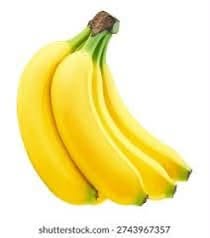
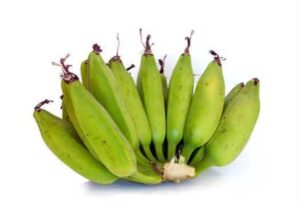
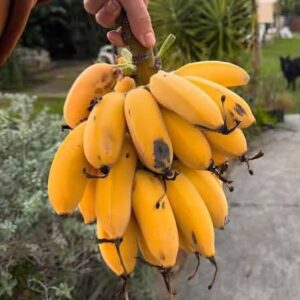
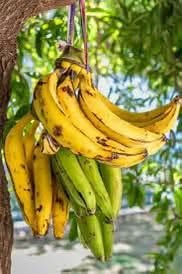
Did you know there is much more to a banana than the yellow fruit we eat?
Know the facts
Banana
Did you know there is much more to a banana than the yellow fruit we eat? When we hear the word banana, many of us immediately picture a yellow, sweet fruit. But bananas are actually a huge and diverse group of crops, with different varieties grown for eating fresh, cooking, processing and other uses. And here in the Caribbean, we have our own favourites! From plantain and bluggoe to dessert bananas, the banana family has plenty to discover.
Let’s peel back the facts!
What exactly is a banana?
Bananas and plantains belong to the Genus Musa. They are tropical and subtropical plants that produce fruit in bunches, often called hands, with individual fruits called fingers. Although we commonly think of bananas as trees, they are actually large herbaceous plants.
That’s right…
A banana plant is not technically a tree! What looks like a trunk is actually a pseudostem, formed by tightly packed leaf sheaths. The real stem grows underground, and after producing a bunch of fruit, the main plant eventually completes its life cycle while new shoots can develop from the underground structure.
Not all bananas are meant for the fruit bowl!
One of the biggest misconceptions about bananas is that all bananas are sweet dessert fruits.
Not at all!
FAO describes banana diversity as including dessert bananas, such as Cavendish, and cooking types such as Plantains, with some varieties having dual uses.
This gives us two broad categories to think about:
Dessert bananas
These are generally eaten ripe and have softer, sweeter flesh.
Examples include:
● Cavendish
● Gros Michel
● Lady’s Finger a.k.a Finger Rose
● Red bananas
● Lacatan
Cooking bananas
These are generally cooked before eating and include:
● Plantains
● Bluggoe
● other cooking cultivars
The distinction isn’t always absolute because some cultivars can be used both as dessert and cooking bananas.
Caribbean bananas: we have a variety!
The Caribbean has a rich history of banana and plantain cultivation, and farmers grow a wide range of Musa types.
Some names you may recognize include:
● plantain
Plantains are generally used as a cooking banana.
They are usually firmer and starchier than dessert bananas and can be boiled, fried, baked or roasted.
Plantains include several types, including French and Horn plantain groups.
Bluggoe a.k.a Buggament
Bluggoe is a cooking banana in the ABB group. It is sometimes known by other names, including burro, chato, moko and Orinoco, depending on the region. The Crop Diversity database classifies Bluggoe as ABB and records it as having both cooking and dessert uses. So when you hear someone talking about Bluggoe, you’re not talking about an entirely different plant from the banana family, you’re talking about a particular banana cultivar group.
Gros Michel
Before Cavendish bananas became dominant in international trade, Gros Michel was one of the world’s major commercial dessert bananas. It is an AAA banana and is still grown in some places. Its history is particularly important because Gros Michel was severely affected by Fusarium wilt, also known as Panama disease, which contributed to the shift toward Cavendish varieties in commercial production.
Cavendish
When you buy a familiar supermarket banana, there is a good chance it belongs to the Cavendish group.
Cavendish includes cultivars such as:
● Grand Nain
● Williams
● Giant Cavendish
● Dwarf Cavendish
● Valery
These are all recognized within the broader Cavendish group.
Red banana
Yes, bananas can naturally have reddish or reddish-purple skin! Red banana cultivars are grown in tropical regions and are generally eaten as dessert bananas. Examples include Red and Red Jamaican types.
So what’s the difference between a banana and a plantain?
This is where things can get confusing!
Plantains are part of the banana family, but they are generally classified and used as cooking bananas.
A simple way to think about it is:
➢ dessert banana → generally sweeter and commonly eaten ripe
➢ plantain → generally starchier and commonly cooked
But remember:
there isn’t always a sharp line between the two.
Some banana cultivars can be used both as dessert fruit and for cooking.
Did you know bananas can grow from underground?
Banana plants produce new shoots, often called suckers, from their underground corm or rhizome system. This means a banana plantation can continue producing new plants without farmers having to plant a completely new seed for every crop.
And here’s another interesting fact:
➢ most cultivated bananas don’t produce useful seeds!
Many commonly cultivated bananas are seedless or have greatly reduced seeds, which is one reason they are commonly propagated vegetatively using suckers or other planting material.
Bananas have a fascinating history:
Bananas originated in Southeast Asia and the surrounding regions and spread through tropical areas of the world over centuries.
Today, bananas are grown across tropical and subtropical regions, particularly in Asia, Latin America and Africa.
The crop became especially important in the Caribbean and Latin America for both food security and international trade.
FAO notes that bananas and plantains have been particularly important to Caribbean economies and food security.
Bananas are important to agriculture:
Bananas aren’t just something we put in smoothies.
They contribute to:
● food security
● farmer livelihoods
● agricultural employment
● local and international trade
● household food supplies
● agricultural diversity
Plantains and cooking bananas are particularly important as starchy food crops in many tropical and Caribbean communities.
But bananas have enemies too!
Banana production faces serious threats from plant diseases. One of the most important is Fusarium wilt, commonly known as Panama disease.
A strain known as Tropical Race 4 (TR4) has caused serious concern for the global banana industry because it can affect Cavendish bananas as well as other banana and plantain varieties.
FAO reports that TR4 has been confirmed in numerous banana-producing countries and that managing the disease after farmland becomes contaminated can be difficult and costly.
This is why biosecurity, clean planting material and responsible movement of plant material are so important for protecting banana production.
A whole family of flavours!
Here’s a quick look at some banana types you may encounter across the Caribbean and other tropical regions:
Type
General Use
plantain
cooking
bluggoe
cooking; some dual uses
cavendish
dessert
gros michel
dessert
lady’s finger
dessert
red banana
dessert
lacatan
dessert
french plantain types
dessert
horn plantain types
dessert
These names represent different cultivars or cultivar groups, rather than completely different plant species.
Sources: Food and Agriculture Organization of the United Nations (FAO); University of Florida Institute of Food and Agricultural Sciences (UF/IFAS); FAO AGRIS; and the Crop Diversity/Musa Germplasm Information System.