Sweet Sop and Sour Sop
 Know the Facts
Sweet Sop and Sour Sop
they may both belong to the same family, but they are definitely not the same fruit!
Have you ever bitten into a sweet, creamy sweet sop or enjoyed a refreshing sour sop drink?
These two tropical favourites are often confused because they are related. But once you know what to look for, telling them apart becomes much easier!
What is Sweet Sop?
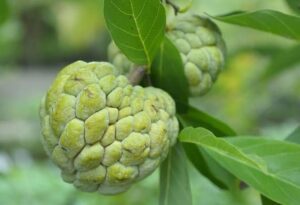
Sweet sop, also known as sugar apple or custard apple, is the fruit of Annona squamosa.
It belongs to the Annonaceae family, the same plant family as sour sop.
Sweet sop is a relatively small tropical fruit tree and is widely grown throughout tropical regions. FAO describes Annona squamosa as indigenous to tropical America and the West Indies and widely cultivated throughout the tropics.
The fruit has a very distinctive appearance:
● green or sometimes reddish-purple skin
● rounded, raised segments that look almost like scales
● soft, creamy-white flesh
● numerous dark seeds
● a naturally sweet, custard-like texture
And the name really does give away one of its biggest characteristics:
sweet sop = sweet!
The flesh has a very sweet, pleasant flavour and is commonly eaten fresh. It can also be used in desserts, ice cream and other preparations.
What is Sour Sop?
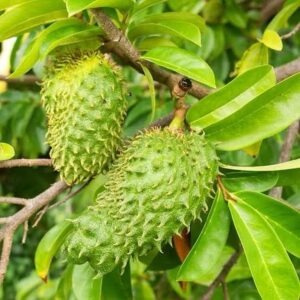
Sour Sop, commonly written as soursop, is the fruit of Annona muricata.
It is also known by names such as guanábana and graviola.
Like sweet Sop, it belongs to the Annonaceae family, but it is a different species. FAO identifies soursop as Annona muricata and notes that it is associated with the Antilles and northern South America.
Soursop fruit is generally:
● Green
● larger and more elongated than sweet sop
● covered with soft, curved/spiny projections
● filled with soft white flesh
● contains dark seeds
● known for its distinctive sweet-and-sour flavour
Its pulp is commonly used to make:
● Drinks
● ice cream
● desserts
● juices and other refreshments
So what’s the big difference?
Sweet Sop Sour Sop
Annona squamosa Annona muricata
Also called sugar apple Also called soursop or guanábana
Usually smaller Usually much larger
Rounded or heart-shaped fruit More elongated fruit
Distinct, raised segments on the skin Green skin with soft, curved projections
Very sweet, custard-like flesh Distinctive sweet-and-sour flavour
Soft, creamy texture Soft, fibrous/juicy pulp
Often eaten fresh Often used for drinks, desserts and other preparations
The easiest way to remember:
● sweet sop → sweet, segmented fruit
● sour sop → larger, green, spiny fruit with a sweet-and-sour flavour
Here’s a fact that might surprise you!
They are relatives!
Sweet Sop and Sour Sop belong to the same plant genus:
❖ Annona
But they are different species.
❖ Sweet sop = annona squamosa
❖ Sour sop = annona muricata
The genus also includes other familiar tropical fruits such as Cherimoya, Custard Apple and Atemoya. In fact, Atemoya is a hybrid of Sugar Apple and Cherimoya!
So the next time you enjoy an atemoya, you are tasting part of the same fascinating botanical family
.
Why should we know about these fruits?
Sweet sop and sour sop are both familiar tropical fruits in the Caribbean and form part of our region’s rich agricultural diversity.
Understanding the differences between crops helps us appreciate:
● plant diversity
● local fruit production
● food and nutrition
● Horticulture
● Agricultural opportunities
And perhaps most importantly, it reminds us that the names we use for fruits don’t always tell the whole story.
Sources: Food and Agriculture Organization of the United Nations (FAO); University of Florida Institute of Food and Agricultural Sciences (UF/IFAS), tropical fruit and horticulture resources.