Have you ever wondered what Apiculture and Horticulture actually mean?
Know the Facts
One has a “Buzz”..… the other has a “Bloom”!
Have you ever wondered what Apiculture and Horticulture actually mean?
They may sound like complicated agricultural terms, but you probably encounter both of them more often than you realize!
What is Apiculture?
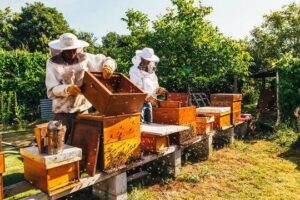
Apiculture is the science and practice of keeping and managing bees. The word comes from Apis, the Latin word associated with bees.
In practical terms, Apiculture, commonly called Beekeeping, involves managing bee colonies, usually in hives, for purposes such as:
● Honey production
● Beeswax production
● Pollination services
● Propolis and pollen collection
● Queen and colony management
● Maintaining healthy bee colonies
FAO notes that beekeeping provides much more than honey. Pollination and the maintenance of biodiversity are among the most important services provided by bees.
Did you know?
Honey isn’t the only reason bees are important to Agriculture!
When bees visit flowers to collect nectar and pollen, they can transfer pollen between flowers. This helps plants reproduce and can contribute to the production of fruits and seeds.
FAO reports that around three-quarters of the world’s food crop types depend on pollinators to some degree, while pollinators contribute to approximately 35% of global crop production by volume.
So when you see a bee visiting a flower, it may be doing much more than looking for food, it could be helping support the next harvest!
What is Horticulture?
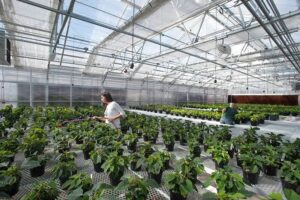
Horticulture is the branch of agriculture concerned with cultivating plants for food, medicinal purposes and aesthetic value.
In simpler words:
Horticulture = growing and managing plants.
Horticulture includes areas such as:
● Vegetable production
● Fruit production
● Floriculture – growing flowers and ornamental plants
● Nursery production
● Landscaping and gardening
● Tree and ornamental plant production
Horticultural crops include many of the foods and plants we encounter every day, including fruits, vegetables, flowers, nursery plants and nuts.
So what’s the big difference?
Apiculture Horticulture
Focuses on bees and bee colonies Focuses on plants and plant production
Involves managing bees Involves cultivating and managing plants
Produces honey, beeswax and other bee
products Produces fruits, vegetables, flowers, nursery plants and other crops
Provides valuable pollination services Includes many crops that benefit from pollination
Involves hives, colonies and apiaries Involves gardens, orchards, nurseries and farms
But there’s a fascinating connection…
Bees + Plants = A powerful Agricultural Partnership!
Imagine an orchard filled with mango, citrus or other flowering plants.
1. Flowers provide bees with nectar and pollen.
2. Bees visit the flowers while foraging.
3. During those visits, pollen can be transferred between flowers.
4. Successful pollination can help certain crops produce fruits and seeds.
This relationship is one reason pollinators are so important to agricultural production. FAO identifies pollination as a critical link between natural ecosystems and agriculture.
Why does this matter to Antigua and Barbuda?
For an agricultural community, bees and plants are part of the bigger picture of food production. Healthy pollinator populations can support the production of many fruits and vegetables, while horticulture provides food, livelihoods, landscaping plants and other products. It also reminds us that agriculture isn’t made up of isolated activities.
● Beekeeping
● Crop production
● Pollination
● Trees
● Biodiversity,
All interact within the wider agricultural and natural environment.
And here’s a sweet fact!
A hive is more than a honey factory!
A well-managed bee colony can provide several valuable products and services, including:
● Honey
● Beeswax
● Pollen
● Propolis
● Queen bees and colonies
● Pollination services
FAO specifically identifies honey, wax, pollen and propolis among the products associated with beekeeping, while pollination is one of its major ecological and agricultural benefits.
Information sources: Food and Agriculture Organization of the United Nations (FAO) and United States Department of Agriculture (USDA).