Mariculture and Aquaculture
 Know the Facts
Did you know?
Not all fish and other aquatic foods that reach our plates have to come from the wild. Some are farmed, and this is where aquaculture comes in!
What is Aquaculture?
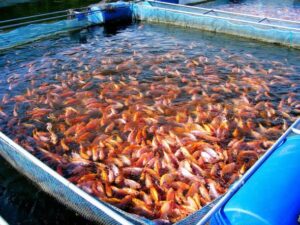
Aquaculture is the farming of aquatic organisms. This includes the controlled growing and rearing of fish, shellfish, crustaceans and aquatic plants, among other aquatic species.
Just like farmers grow crops and raise livestock on land, aquaculture farmers manage aquatic species to increase production. This can involve activities such as providing feed, monitoring growth, protecting the animals from predators and maintaining suitable water conditions
Aquaculture can take place in different environments:
● Freshwater aquaculture – farming species in freshwater environments such as ponds, tanks, lakes and reservoirs.
● Brackishwater aquaculture – farming in areas where freshwater and seawater mix, such as estuaries and lagoons.
● Mariculture – farming aquatic organisms in seawater.
What exactly is Mariculture?
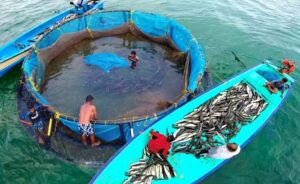
Mariculture is a specialized branch of aquaculture that focuses on farming marine organisms in seawater. Depending on the species and farming system, Mariculture can take place in coastal areas, ponds, tanks, pens or floating cages.
Species that can be considered for marine farming include:
● Marine fish – such as snapper and grouper
● Crustaceans – including shrimp and other marine crustaceans
● Shellfish – such as oysters, mussels and cockles
● Seaweeds and other marine plants
Did you know? Antigua has a history with Aquaculture!
Although agriculture is gaining renewed attention today, the idea is not new to Antigua and Barbuda.
FAO records show that Antigua explored aquaculture as far back as the late 1970s and early 1980s, including attempts involving freshwater fish such as tilapia and catfish. However, limited rainfall presented challenges for freshwater aquaculture.
Antigua’s coastal environment has also long been identified as having potential for mariculture. Historical FAO assessments highlighted the island’s sheltered bays and coastal areas as potentially suitable for marine farming, including the culture of marine fish, seaweed and shellfish.
And now, Antigua is looking to the Sea!
Antigua and Barbuda is preparing to move forward with mariculture development.
This is particularly significant because marine aquaculture is already being explored and practiced through initiatives elsewhere in the Caribbean.
For example, in 2025, FAO reported the launch of a marine fish farming pilot in Jamaica, alongside shrimp grow-out pilots in Saint Lucia and Saint Kitts and Nevis, as part of a wider Caribbean initiative to develop marine aquaculture capacity.
This regional movement demonstrates that Caribbean countries are increasingly looking at the sea not only as a source of wild-caught fish, but also as a place where aquatic food can be responsibly farmed and produced.
Why does Mariculture matter?
Mariculture has the potential to contribute to several areas of the blue economy:
● More food production
Farming aquatic species can contribute to the supply of fish and other seafood for local consumption.
● New opportunities
The development of Mariculture can create opportunities for farmers, fishers, entrepreneurs, technicians and other workers along the production chain.
● Economic development
Aquaculture products can supply local markets and, where production is viable, potentially contribute to export opportunities.
● Supporting the fisheries sector
Mariculture provides another way of producing aquatic foods alongside traditional capture fisheries.
● Making use of Antigua & Barbuda’s marine environment
As an island nation surrounded by the Caribbean Sea, Antigua and Barbuda has a natural interest in exploring responsible and sustainable uses of its marine resources.
FAO has previously identified marine culture as an especially relevant option for smaller Caribbean islands, where limited freshwater and land resources can make large-scale freshwater aquaculture more difficult.
The Future is Blue!
As Antigua and Barbuda explores the development of Mariculture, the sector presents an opportunity to combine agriculture, fisheries, science, entrepreneurship and marine resources in new ways.
With Mariculture already being explored across the Caribbean, Antigua and Barbuda is looking toward opportunities that can help strengthen food production, livelihoods and the country’s blue economy.
“Know the fact!”
Aquaculture is the bigger umbrella. Mariculture is one part of it.
Aquaculture = aquatic farming
Mariculture = marine/seawater farming
Sources: Food and Agriculture Organization of the United Nations (FAO), Fisheries and Aquaculture Division.