CRFM and ATLAFCO/COMHAFAT sign agreement to strengthen Africa–Caribbean fisheries cooperation

New framework opens opportunities for scientific exchange, sustainable aquaculture, digital innovation, and more resilient coastal livelihoods
RABAT, Morocco, 3 November 2026 (CRFM)—The Caribbean Regional Fisheries Mechanism (CRFM) and the Ministerial Conference on Fisheries Cooperation among African States Bordering the Atlantic Ocean (ATLAFCO/COMHAFAT) have signed a Memorandum of Understanding (MoU) to strengthen cooperation on sustainable fisheries, aquaculture, and ocean governance.
The agreement unites two regional intergovernmental organizations with shared interests in the sustainable use of aquatic resources, strengthening food and nutrition security, and expanding the economic opportunities that healthy oceans can provide. It creates a platform to exchange knowledge, expertise, technologies, and institutional experience across the Atlantic while advancing mutually beneficial Africa–Caribbean and South–South cooperation.
For fishers, fish farmers, processors, vendors, and coastal communities, the framework creates opportunities for cooperation that can support better fisheries management, safer and more traceable seafood, stronger value chains, and greater resilience to climate change.
The Honorable Randy Baltimore, Chairperson of the CRFM Ministerial Council, welcomed the agreement as an important step toward strengthening relations between the two regions.
“Africa and the Caribbean share a deep connection to the ocean and a common responsibility to ensure that its resources sustain our people for generations to come. This agreement provides an important platform for translating shared priorities into practical cooperation that supports food security, protects livelihoods, and creates opportunities for our fishing and aquaculture communities. We look forward to a relationship grounded in mutual respect, shared learning, and tangible benefits for our Member States,” Hon Baltimore said.
The MoU outlines a broad range of areas in which the organizations may cooperate, subject to their respective mandates, priorities, and available resources. These include:
Sustainable fisheries and stronger action against illegal, unreported, and unregulated fishing, including monitoring, control, and surveillance, port State measures, and capacity development.
Aquaculture and mariculture development, with attention to technology, investment, biosecurity, aquatic animal health, and climate-resilient production systems.
Digital transformation and scientific cooperation, including fisheries statistics, electronic reporting, information management, advanced technologies, and collaboration among scientific networks, universities, and research institutions.
Seafood traceability, food safety, and market development, supporting stronger aquatic food value chains, market information, and trade opportunities.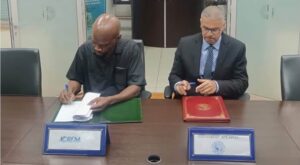
Climate resilience and sustainable Blue Economy development, including disaster risk reduction, access to climate finance, renewable energy applications, and investment mobilization.
Ocean governance and biodiversity, including marine spatial planning, ecosystem-based management, and cooperation on relevant international fisheries and ocean instruments.
Sargassum research and management, including monitoring, utilization, innovation, and investment opportunities.
The agreement also provides for professional training, technical exchanges, study visits, fellowships, and joint scientific activities. Cooperation between ATLAFCO’s scientific network and CRFM’s scientific and technical networks could connect expertise across regions and strengthen the evidence available to fisheries managers and policymakers.
Dr. Marc Williams, Executive Director of the CRFM, emphasized the importance of translating the framework into focused, achievable initiatives.
“The value of this MoU will be measured by the practical improvements it enables. By connecting our scientific networks, sharing technologies and institutional experience, and developing joint proposals, we can strengthen the information, skills, and partnerships needed to manage fisheries more effectively. Our ambition is to help turn knowledge into better decisions, innovation into useful tools, and cooperation into lasting benefits for the people who depend on fisheries and aquaculture,” Williams said.
Designated focal points within each organization will support implementation. The MoU provides for mutually agreed annual or multi-year work programs that set out priority activities, expected results, responsibilities, and indicative resource requirements, along with progress reviews at least annually.
The framework also enables organizations to develop joint programs, projects, and investment proposals and, where mutually agreed, to approach development partners, financial institutions, and relevant funding mechanisms. This creates an avenue to mobilize support around shared priorities while ensuring activities remain realistic and responsive to Member States’ needs.
The MoU establishes a non-binding framework for cooperation and does not, in itself, commit either organization to expenditure. Activities with financial obligations will require separate written arrangements and the appropriate approvals. Cooperation will respect the sovereign rights, international obligations, and independent positions of the organizations’ respective Member States.
The agreement provides an initial three-year term, effective upon signature and completion of the respective internal approval procedures and can be renewed by mutual written agreement.
Through this framework, CRFM and ATLAFCO/COMHAFAT are strengthening the foundations for sustained exchange of ideas, expertise, and practical solutions across the Atlantic—supporting sustainable aquatic food systems and more resilient coastal economies in both regions.