Reading the Landscape: What Antigua’s Trees Reveal About Its History by Camellia Wallace Tonge
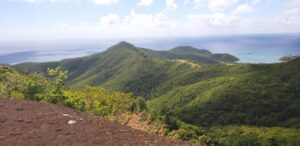 Photo by Jameel Ambrose
A tree in Antigua is never simply a tree. Where it grows, how it survives and what surrounds it can reveal the history written into the land.
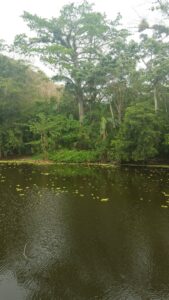
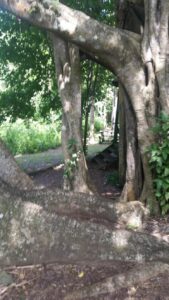
This is particularly evident in the island’s wooded areas. Sandbox Tree (Hura crepitans) Mahogany (Swietenia macrophylla), Ironwood (Krugiodendron ferreum), Silk Cotton Tree (Ceiba pentandra), Gunstock (Guazuma ulmifolia) and Whitewood (Bucida buceras) are among the species recorded at Wallings Forest. Beyond their individual characteristics, these trees form part of an ecosystem that provides wildlife habitat and contributes to Antigua’s natural heritage.
Antigua’s forests have been shaped by centuries of human activity. A 1994 study by the United States Forest Service documented how forest lands across Antigua and Barbuda were cleared for agriculture, burned, cut down and grazed from the seventeenth century onward. Despite this extensive disturbance, a large majority of the islands’ original woody plant species were still present. This finding refers to the continued presence of plant species, not the survival of the original forest cover. Much of the original forest had been cleared, and some areas developed secondary forest after agricultural activity declined.
The island’s forest environments also differ. Moist forest is associated with Christian Valley and the Mount Obama area, while Wetherill Estate and Mill Reef are identified with dry forest habitats. These differences in growing conditions influence the vegetation found in each area.
Wallings Forest, in southwestern Antigua, is particularly significant. The Key Biodiversity Areas database identifies it as supporting the largest and best remaining tract of moist evergreen forest on the island. Its historical assessment identifies logging, residential development, tourism-related construction and agricultural conversion as threats. However, the database records 2009 as the year of its last assessment. These threats were documented historically; their current extent and severity have not been independently confirmed. An updated assessment would help establish the forest’s present condition and determine how these pressures may have changed.
Understanding Antigua’s trees requires more than identifying species. It means recognizing the environments in which they grow, the agricultural history of the land on which they stand, and the wildlife that depends on these habitats. The island’s forests are living records of a landscape shaped by natural processes and human decisions. Understanding what remains, and how it has changed, is an essential step towards determining what should be protected.
Source note: Historical information is drawn from a 1994 United States Forest Service study on the woody plants of Antigua and Barbuda. Information on Wallings Forest’s conservation significance and historically documented threats is drawn from the Key Biodiversity Areas database, which records 2009 as the year of its last assessment.