Antiguan represents LAC at UN Biodiversity Conference (CBD COP17)
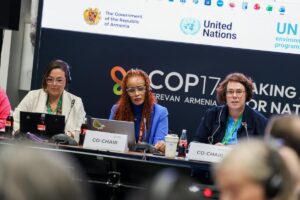
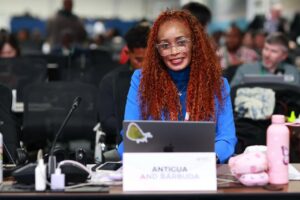 Kishma Primus-Ormond serves as the Senior Plant Protection Officer for the Ministry of Agriculture of Antigua and Barbuda. She is currently representing the nation as a Senior Negotiator at the UN Biodiversity Conference (CBD COP17) in Yerevan, Armenia. In her multilateral capacity, Mrs. Primus-Ormond serves as the SBSTTA Representative for the Latin American and Caribbean Group (GRULAC) and is a Co-Chair steering the critical negotiations on Biodiversity and Health.
The current COP17—the 2026 UN Biodiversity Conference—is a critical global summit focused on halting and reversing nature loss around the world. Taking place in Yerevan, Armenia, from October 19 to 30, 2026, its primary purpose is to serve as the “Global Stocktake for Nature.”
It acts as the high-stakes, halfway assessment to review whether countries are actually meeting the 2030 deadlines established under the landmark Kunming-Montreal Global Biodiversity Framework (KMGBF).
Core Goals & Priorities
• The 30×30 Target: Accelerating global efforts to effectively protect and manage 30% of the world’s land, inland waters, and oceans by 2030.
• Closing the Finance Gap: Mobilizing at least $200 billion per year for biodiversity from all sources, while finding ways to eliminate or reform $500 billion in harmful government subsidies (like those funding destructive agriculture or fossil fuels).
• Genetic Resource Sharing: Finalizing rules for the Cali Fund, a mechanism designed to ensure large industries (like pharmaceuticals) fairly share profits when they use digital genetic data from nature.
• Empowering Local Leaders: Ensuring Indigenous peoples, local communities, and vulnerable nations (like Small Island Developing States) have a direct seat at the decision-making table and direct access to conservation funding.
Participation at COP17 provides Antigua and Barbuda with a crucial platform to directly shape global environmental policies and amplify our voice on the world stage. Our work here extends beyond negotiations; it creates a direct pathway for regional capacity building. For example, Antigua and Barbuda recently hosted a successful Risk Assessment Workshopunder the framework of Item 11 on Cooperation. This collaborative effort has been instrumental in strengthening our region’s localized expertise in managing ecological risks and implementing effective risk management strategies.