Youth Encouraged to Shape Antigua and Barbuda’s Future at Agriculture Youth Empowerment Workshop by Shenequa Williams
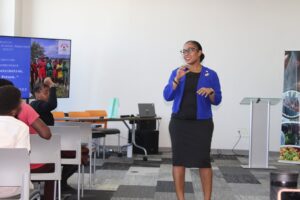
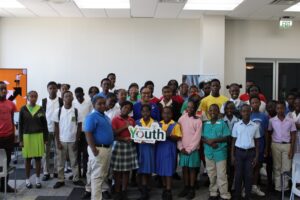 Young people from various primary and secondary schools across the nation were encouraged to think critically about their role in shaping the nation’s future during the Agriculture Youth Empowerment Workshop, held yesterday, Thursday 15th October 2026, at the John E. St. Luce Finance and Conference Center, under the theme “My Contribution, Our Future.”
The interactive workshop was facilitated by Mrs. Nicolette Francis/Agricultural Science Education Officer within the Ministry of Education, who engaged students in a series of activities designed to promote teamwork, critical thinking, problem-solving and a greater appreciation for agriculture and its importance to national development.
The session began with a team-building exercise in which students were challenged to have every member of their group touch a ball within one second. While the activity appeared simple, it carried an important message about cooperation, communication and the value of working together to achieve a common goal.
Mrs. Francis used the exercise to encourage students to remain focused on their personal ambitions while recognising the importance of supporting one another. She reminded participants that success is not only about achieving individual goals but also about building meaningful relationships and helping others along the way.
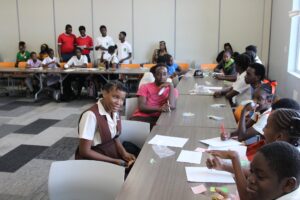
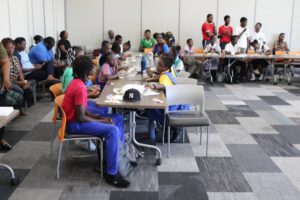
The second activity challenged students to envision where they would like Antigua and Barbuda to be by the year 2050. Working in groups, participants shared their ideas and selected representatives to present their collective visions for the country’s future.
Several groups expressed a desire to see Antigua and Barbuda become more self-sufficient in food production and less dependent on imported agricultural products. Their proposals included increasing local food production, improving access to agricultural land, strengthening water supply systems, expanding livestock farming and investing in better agricultural facilities.
Following each presentation, Mrs. Francis challenged the students to identify potential obstacles to implementing their ideas. Among the concerns raised were limited financial resources, water scarcity, insufficient agricultural land, rising production costs and negative perceptions of farming among young people.
Rather than focusing solely on these challenges, Mrs. Francis encouraged participants to explore possible solutions, including accessing grants, embracing innovative agricultural practices, building partnerships and taking advantage of educational and networking opportunities.
Food security was another major focus of the workshop, with discussions highlighting the importance of strengthening local production, encouraging backyard gardening and promoting small-scale livestock farming.
Mrs. Francis also spoke about the significance of the Antigua Black Pineapple, encouraging students to appreciate and protect the country’s unique agricultural products. She emphasised the need for greater youth involvement in agriculture and challenged participants to reconsider the perception that farming is an undesirable career.
The workshop later shifted its focus to climate change and its impact on the agricultural sector. Through another interactive group activity, students explored the concept of climate-smart agriculture and were asked to identify practical ways Antigua and Barbuda could adapt to changing climatic conditions.
Discussions centred on rising temperatures, water shortages and the effects of extreme heat on crops and livestock. Participants considered measures such as improving water management, providing adequate shade for animals and adopting farming methods that can withstand changing weather patterns.
Throughout the workshop, Mrs. Francis encouraged students to recognise that their ideas, creativity and willingness to take action could play an important role in addressing the challenges facing the agricultural sector.
The session concluded with a presentation of tokens of appreciation to some of the top participants in recognition of their active involvement and contributions throughout the workshop, bringing the educational and engaging session to a celebratory close.
The Agriculture Youth Empowerment Workshop provided an opportunity for young people to share their perspectives, develop their problem-solving skills and gain a better understanding of the role they can play in strengthening Antigua and Barbuda’s agricultural sector.
Under the theme “My Contribution, Our Future,” the workshop reinforced the importance of empowering the next generation to become active contributors to national development, while encouraging them to embrace agriculture, innovation and sustainable practices as essential elements in building a more resilient and food-secure Antigua and Barbuda.