Know The Facts Sweet Potato
Know The Facts
Sweet Potato
More than just a side dish!
What’s sweet, colourful, nutritious, and growing right here in Antigua and Barbuda?
You guessed it, sweet potato!
Often treated as just another side dish on the dinner table, sweet potato is actually one of Antigua and Barbuda’s important agricultural crops, with a story that reaches from our farms all the way to our food security and future agro-processing opportunities.
One Crop, many varieties
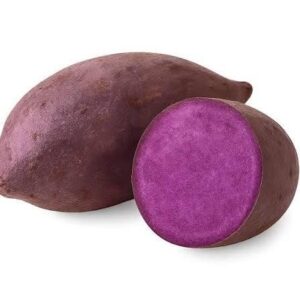
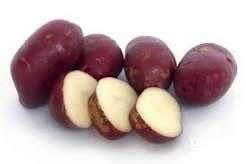
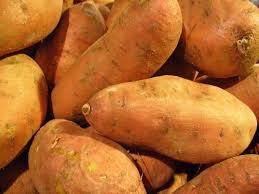
Did you know that Antigua and Barbuda grows more than 16 varieties of sweet potato?
Among the varieties found locally are Catch Me, Ube, Red King, Black Rock, Hurricane, King Crown and Mandela. These varieties can differ in colour, shape, taste and other characteristics.
So, when you buy a sweet potato at the market, you may be looking at just one of many different local varieties!
How many types of sweet potato do we have?
This is where things get interesting!
Agricultural research and local records have documented a wide range of sweet-potato varieties in Antigua and Barbuda. Varieties documented through CARDI and the Ministry include:
● Oki
● Bakra Mary
● King Crown
● Mandela
● Beauregard
● Chicken Foot
● Purple Queen
● Black Rock
● Catch Me
● Red King
● Hurricane
● Dominica Purple
● Burton 1
● 91
● White Drill
● Ube
Local farmers have also reported growing or maintaining other varieties, including Cooly Gal, Eat Now, Masterpiece, Athill, Kerry and Big Red.
And here’s the fascinating part: the Ministry has reported that approximately 90 sweet-potato accessions have been identified in Antigua and Barbuda. An accession is essentially a distinct plant material or genetic line collected and maintained for research or conservation.
So when we talk about “Antigua’s sweet potatoes,” we’re talking about far more diversity than the average shopper may realize!
Built for our Climate.
Sweet potato (Ipomoea batatas) is a root crop that is grown by farmers throughout Antigua and Barbuda.
One of its major advantages is its adaptability and drought tolerance, making it particularly valuable in an island environment where farmers have to contend with periods of limited rainfall and water availability.
The crop is predominantly cultivated in the south-central and southeastern farming communities, although farmers across the country’s agricultural districts produce it.
But what makes it “Sweet”?
Despite its name, sweet potato isn’t simply a sugary vegetable!
The natural sweetness develops as the starches in the root are converted into sugars, particularly during cooking. This is one reason sweet potatoes can be enjoyed in so many different ways.
● Roasted
● Boiled
● Added to meals
● Baked into desserts
● Used in breads
● Processed into chips
● Even developed into flour!
The possibilities go far beyond the traditional boiled sweet potato on your plate.
A Nutrient-Packed Root.
Sweet potatoes provide important nutrients including fibre, potassium, vitamin C and antioxidants. Orange-fleshed varieties can also be an important source of beta-carotene, which the body can convert into vitamin A.
That means this humble root crop isn’t just filling, it can contribute valuable nutrients to our diets.
From Farmers to Families.
Sweet potato is also important to the livelihoods of local farmers.
Farmers sell their produce through local markets and food establishments, while opportunities are growing to transform the crop into value-added products. The Ministry has identified products such as flour, bread and chips as areas with potential for expanding the sweet potato value chain.
This means that sweet potato isn’t only about what we eat today, it can also create opportunities for farmers, agro-processors and entrepreneurs.
The Science behind the Sweet Potato.
Here’s something exciting happening behind the scenes!
Antigua and Barbuda is participating in the Next Generation Sweet Potato Project, a regional initiative involving the Ministry of Agriculture, IICA, CARDI and FAO.
One of the major challenges facing production is access to clean, vigorous planting material. Planting material that carries pests, diseases or viruses can contribute to reduced productivity.
In 2025, local varieties including Hurricane, Black Rock and King Crown were sent to the United States Department of Agriculture (USDA) for a clean-up process to produce disease-free planting material.
And the work has continued.
In February 2026, Antigua and Barbuda launched its Clean Seed Sweet Potato Initiative, with six local varieties identified for tissue-culture work: Black Rock, Hurricane, King Crown, Mandela, Catch Me and Big Red. The initiative aims to give farmers access to healthier planting material while strengthening productivity and resilience.
Why does this matter?
Because a stronger sweet potato sector can mean:
● More locally produced food
● Stronger opportunities for farmers
● Greater agricultural resilience
● More agro-processing possibilities
● New opportunities for entrepreneurs
● Greater food and nutrition security
And there’s another interesting piece of the puzzle: sweet potato has potential to contribute to import substitution, including the development of products that can partially replace imported wheat flour.
So, how well do you know your sweet potato?
The next time you see one at the market, don’t underestimate it!
Behind that ordinary-looking root is a crop with varieties, history, nutrition, economic potential and a future being shaped through science and innovation.
From Catch Me to Ube, Red King to Black Rock, Antigua and Barbuda’s sweet potatoes come in more forms than you might expect.
Small root. Big potential.
Let’s continue to grow, support and celebrate locally produced food!
What is your favourite way to eat sweet potato?
Sources: Ministry of Agriculture, Lands, Fisheries and the Blue Economy, Antigua and Barbuda; Inter-American Institute for Cooperation on Agriculture (IICA); Caribbean Agricultural Research and Development Institute (CARDI); Food and Agriculture Organization of the United Nations (FAO); United States Department of Agriculture (USDA).