Papaya
 Know The Facts
Papaya
The fruit that can be eaten green OR ripe!
Sweet, juicy and packed with flavour, Papaya is a familiar tropical fruit across the Caribbean.
But did you know that papaya is more than just a fruit?
➢ young papaya can be prepared as a vegetable
➢ ripe papaya can be eaten fresh
➢ the crop has agro-processing potential
➢ it can provide income opportunities for farmers
➢ and it can help diversify Caribbean agriculture
Let’s take a closer look at this fascinating crop!
What exactly is Papaya?
Papaya is the fruit of Carica papaya, a fast-growing tropical plant in the Caricaceae family. Although it looks like a small tree, papaya is actually a large, fast-growing herbaceous plant. It can grow approximately 3–10 metres tall and generally has a single main stem with large, distinctive leaves at the top. The fruit grows directly along the upper part of the stem, creating the familiar sight of papayas hanging beneath the plant’s large leaves.
Papaya or Pawpaw?
Here’s something you may hear around the Caribbean:
Papaya = Pawpaw
Both names can refer to Carica papaya.
In parts of the Caribbean, including Trinidad and Tobago and Barbados, the fruit is commonly known as pawpaw, while “papaya” is also widely understood. The scientific name remains Carica papaya.
In other parts of the Caribbean and Latin America, you’ll also hear names such as:
●  lechosa
lechosa●  papaya / lechosa
papaya / lechosa●  fruta bomba
fruta bomba●  papaye
papayeSo, just like many Caribbean crops, one fruit can have several names!
Here’s where Papaya gets interesting!
You can eat it at different stages!
● Green papaya
Young, unripe papaya can be cooked and used as a vegetable. It can also be used in preparations such as salads and pickles.
● Ripe papaya
As the fruit matures, the flesh becomes soft, sweet and juicy and is commonly eaten fresh.
According to FAO’s crop information, papaya can be consumed as a fruit when mature and as a vegetable when immature.
one crop, two very different culinary uses!
What’s inside a Papaya?
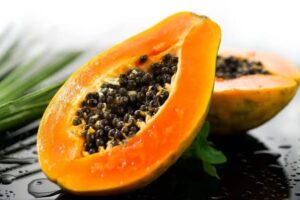
Cut one open and you’ll find:
● soft orange, yellow or reddish flesh
● many small black seeds
● a hollow centre where the seeds are held
The ripe fruit provides nutrients including vitamin C, vitamin A and dietary fibre.
The black seeds are also edible, although they have a distinctive peppery flavour.
Meet Papain!
Here’s a fact many people don’t know:
Papaya produces an enzyme called papain.
Papain is a protein-digesting enzyme found in the latex of the papaya plant, particularly in green fruit.
It has been used commercially for purposes including meat tenderizing and beer processing.
This means papaya has potential value beyond simply selling the fresh fruit.
● Fruit → food
● Plant → useful agricultural and industrial products
Papaya has a Caribbean agricultural history
Papaya isn’t a new crop to the Caribbean.
In fact, a regional workshop on tropical fruit crops, including papaya, pineapple and mango, was held at Jolly Beach, Antigua and Barbuda, from December 1–6, 1991.
The research presented examined papaya production, varieties, propagation, planting, fertilization, irrigation, harvesting and production challenges in the Caribbean.
So Papaya has been part of Caribbean agricultural research for decades!
Why is Papaya important to agriculture?
Papaya has several characteristics that make it an interesting crop for Caribbean agriculture.
1. It can create income opportunities
Papaya can be sold through:
● farmers’ markets
● Supermarkets
● local vendors
● hotels and restaurants
● food processors
Trinidad and Tobago’s Ministry of Agriculture notes that papaya can be profitable even on a small parcel of land, while also identifying opportunities for processing and export.
2. It can diversify farms
Farmers don’t have to depend on one crop.
Papaya can be grown alongside or as part of farming systems containing other tropical crops.
Caribbean agricultural research has specifically identified papaya as an alternative for agricultural diversification and an income-generating crop. More crop options can mean more opportunities for farmers.
3. It can contribute to local food supply
Papaya can be eaten fresh when ripe and prepared as a vegetable when green. That versatility means the crop can contribute to the local food supply in different ways. And Caribbean research shows that the domestic market for papaya has significant potential.
4. Papaya has agro-processing potential
What happens when a papaya isn’t sold as fresh fruit? It doesn’t necessarily have to go to waste!
Papaya can be processed into products such as:
● Purées
● Beverages
● Jams
● preserved products
● frozen fruit
● dehydrated products
Caribbean post-harvest research has documented processing into purées, dehydrated products, canned papaya and frozen fruit.
This creates opportunities to add value after the fruit leaves the farm.
5. It can support the agricultural value chain
Papaya production doesn’t only involve the farmer.
A successful papaya industry can create activity for:
● Farmers
● Transporters
● Vendors
● Retailers
● Processors
● packaging businesses
● hotels and restaurants
That is what we call an agricultural value chain, the many people and businesses involved in getting a crop from the farm to the consumer.
Papaya production is significant in the Caribbean
Papaya is not just a backyard crop.
A regional market study based on FAOSTAT data reported that papaya production in the Caribbean region increased substantially between 2009 and 2019, with the Dominican Republic, Cuba, Guyana, Belize and Jamaica among the leading producers in 2019. Jamaica has also developed export markets for papaya, while much Caribbean production is consumed within domestic markets. There is both a local market and potential for regional and international markets.
But growing Papaya isn’t without challenges!
Like every agricultural crop, Papaya has its challenges.
Some of the major concerns documented in Caribbean production include:
● plant diseases
● Pests
● environmental conditions
● post-harvest losses
● transportation and handling
● access to reliable markets
Historical Caribbean research identified bunchy top and virus diseases among major production constraints. This is why healthy planting material, proper crop management, pest and disease monitoring, and good post-harvest handling are important.
Different Papaya types
Papaya varieties can differ in:
● flesh colour
● fruit size
● fruit weight
● plant characteristics
● Flavour
● Maturity
● market suitability
Some papaya cultivars documented in Caribbean production include:
➢ Solo sunrise
A small-fruited type that has been studied for fresh-fruit production in the Caribbean. Research in Trinidad examined a local Sunrise Solo strain and identified commercial possibilities, while also noting disease management as an important consideration.
➢ Tainung
A commercially important hybrid type used in Caribbean papaya production and referenced in CARICOM industry research.
➢ Maradol
A large-fruited papaya type widely grown in tropical production systems.
➢ Red lady
A popular hybrid type known for its reddish-orange flesh and productivity.
Remember: cultivar availability and performance can vary from country to country, so farmers should select planting material suited to their local conditions and intended market.
Sources: Food and Agriculture Organization of the United Nations (FAO); FAO AGRIS; CARICOM Regional Transformation Programme for Agriculture; Ministry of Agriculture and Fisheries, Trinidad and Tobago; Caribbean agricultural research; and COLEACP’s market study of fruit and vegetables from ACP-Caribbean countries.