Crayfish and Lobster
 Know the facts
Crayfish and Lobster
If you’ve ever heard someone in the Caribbean say “Crayfish” or “Crawfish,” you may have wondered exactly what animal they mean.
Here’s the interesting part:
We have Spiny Lobster right here in Antigua and Barbuda!
And depending on where you are, this lobster may also be called Crawfish or Crayfish.
So, is a Crayfish the same thing as a Lobster?
Not necessarily!
What is a Crayfish?
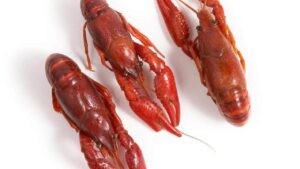
In many parts of the world, the word Crayfish refers to a small, lobster-like crustacean that lives primarily in freshwater.
Freshwater Crayfish generally have:
● freshwater habitats
● hard outer shells
● prominent claws
● several pairs of walking legs
● segmented bodies and tails
They are related to lobsters, but they are not the same as Marine Lobsters.
But here’s the catch…
“Crayfish” is a common name, and common names can vary from place to place.
NOAA Fisheries explains that “crayfish” and “crawfish” can refer both to freshwater crayfish and to saltwater spiny lobsters, depending on regional usage.
What is a Lobster?
A Lobster is a marine crustacean that lives in the ocean. Lobsters belong to several different groups, but they are generally recognized by their hard outer shells, segmented bodies, multiple pairs of walking legs and long antennae.
There are different types of lobsters, including Clawed Lobsters and Spiny Lobsters.
Clawed Lobsters, such as the American Lobster have large front claws used for catching food and defence.
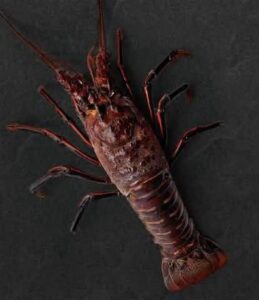
Spiny lobsters, including the Caribbean Spiny Lobster found in Antigua and Barbuda do not have large front claws. Instead, they have prominent spines and long antennae.
The word “Lobster” doesn’t always mean the lobster with the big claws you see in pictures!
Our Caribbean Spiny Lobster (Panulirus argus) is a lobster too, it just belongs to a different group.
So remember:
● crayfish → commonly refers to freshwater, lobster-like crustaceans with claws
● spiny lobster → marine lobster with spines, long antennae and no large front claws
● clawed lobster → marine lobster with large front claws
We have Spiny Lobster in Antigua!
This is where our local story gets interesting.
The Caribbean Spiny Lobster (Panulirus argus) is found throughout the Caribbean, including Antigua and Barbuda.
FAO’s Western Central Atlantic Fishery Commission specifically lists a Spiny Lobster, Antigua fishery, with Panulirus argus identified as the target species.
The Caribbean Spiny Lobster is also commonly known as:
● Caribbean spiny lobster
● spiny lobster
● rock lobster
● crawfish
NOAA lists crawfish and rock lobster among its common names.
So when you hear “crayfish” or “crawfish” in a Caribbean context, the person may actually be talking about a spiny lobster.
So how do you tell them apart?
Crayfish
Lobster
Usually lives in freshwater
Lives in marine/saltwater
Generally smaller
Generally larger
Usually has prominent claws
Depends on the type
Found in rivers, streams, lakes and ponds
Found in seas and oceans
Lobster-like body
Hard shell, segmented body and long antennae
Why does this matter to Antigua and Barbuda?
The Caribbean Spiny Lobster isn’t just an interesting marine animal.
It is also part of the Fisheries resources of Antigua and Barbuda and the wider Caribbean.
FAO reports that thousands of fishers across the Caribbean depend on the Spiny Lobster fishery for income and food security, while regional fisheries organizations continue working on science-based management and sustainable use of the resource.
This connects the species to:
● Fisheries
● Food
● livelihoods
● marine ecosystems
● the blue economy
● sustainable fisheries management
Understanding the animals in our waters is an important part of understanding and protecting our marine resources.
Sources: Food and Agriculture Organization of the United Nations (FAO), Western Central Atlantic Fishery Commission (WECAFC), and NOAA Fisheries