Curriculum for Training of Technicians in Sweet Potato Virus Quarantine Testing (Indexing) and Release of Clean Germplasm to Stakeholders by Shenequa Williams
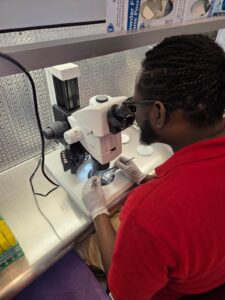
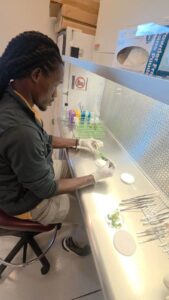 A two-month training was conducted at the USDA in Beltsville, Maryland, between June and September 2026. The training provided practical experience in sweet potato virus quarantine testing, tissue culture and greenhouse management, with a focus on producing and maintaining clean sweet potato planting material. Mr. Vernon Bird Jr./Laboratory Technician, served as the Senior Technician, while Jahmol Colbourne/Plant Protection Officer, served as the Junior Technician. Both represented the Ministry of Agriculture, Lands, Fisheries and The Blue Economy.
The training forms part of a four-year initiative that continues to foster regional collaboration and knowledge sharing, building a community of practice in support of sustainable sweet potato production throughout the Caribbean. The funding comes from the Benefit-Sharing Fund of the International Treaty on Plant Genetic Resources for Food and Agriculture, managed by the Food and Agriculture Organization of the United Nations, with co-financing from the European Union.
The project is implemented by the Inter-American Institute for Cooperation on Agriculture, in collaboration with the Ministries of Agriculture of Antigua and Barbuda, Jamaica and Saint Lucia, along with the Caribbean Agricultural Research and Development Institute.
The programme followed a Train-the-Trainer approach, with participants learning the day-to-day operations of the Sweet potato Germplasm Quarantine Program and taking part in plant quarantine testing. They also gained experience using testing procedures, Standard Operating Procedures (SOPs) and Work Instructions.
The Senior Technician focused on virus elimination, tissue culture, plant micropropagation and virus testing. Key areas included:
· Aseptic techniques, laboratory safety, sterilization, contamination control and media preparation
· Meristem tip culture, thermotherapy and other methods for virus elimination
· Multiplication of virus-free plantlets and maintenance of clean stock
· Virus testing of sweet potatoes, white potatoes and tomatoes using laboratory and greenhouse methods
· Grafting assays with Brazilian morning glory (Ipomoea setosa), PCR and molecular tools
· Rooting, acclimatization and hardening of plantlets
· Transplanting tissue-culture sweet potato plants and harvesting seeds
Practical greenhouse work also covered plantlet care, pruning, greenhouse cleanliness, pest identification and monitoring using traps, as well as pesticide management and biological control through the use of beneficial insects.
The Senior Technician also gained Master Trainer skills, including preparing SOPs and supervising junior staff in tissue culture laboratories.
The Junior Technician focused on the handling, maintenance and distribution of virus-indexed sweet potato plantlets and the clean seed supply chain.
Training covered:
· Clean seed systems and the importance of virus-free planting materials
· Greenhouse infrastructure, sanitation, pest and disease management
· Transferring in-vitro plantlets into pots and rapid multiplication through grafting
· Quality assurance, plant health monitoring and certification
· Recording greenhouse conditions, plant performance, inventory and labels
· Distribution of clean planting materials and communication with farmers and other stakeholders
The Junior Technician also gained Master Trainer skills, including preparing SOPs for the training modules.
Together, the technicians formed the technical nucleus of the National Sweet Potato Clean Seed Group, helping to transfer the knowledge gained and strengthen the production and availability of clean planting material.